Introduction
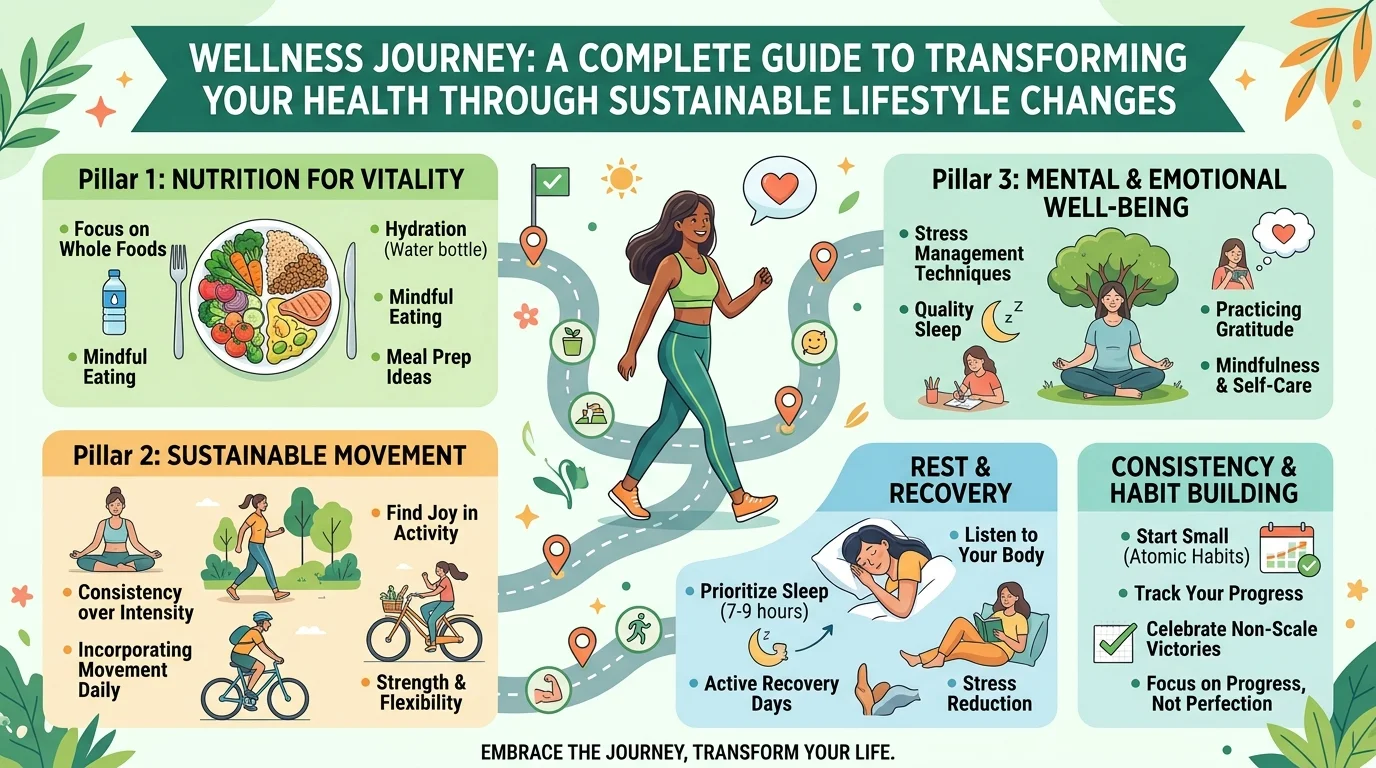
A wellness journey is a personal, ongoing process of adopting habits and practices that improve physical health, mental clarity, emotional balance, and overall quality of life. Unlike quick-fix diets or temporary fitness challenges, a wellness journey recognizes that genuine health transformation takes time, consistency, and self-compassion. It is not about perfection but about progress. It is not about reaching a final destination but about enjoying the path of becoming a healthier, happier, more resilient version of yourself. This comprehensive guide provides a roadmap for starting and sustaining your wellness journey, including evidence-based strategies, practical tools, common obstacles, and ways to measure progress without becoming obsessed with numbers.
What Is a Wellness Journey?
A wellness journey is the intentional process of making lifestyle changes that support long-term health across multiple dimensions of well-being. Unlike a weight loss program with a fixed end date, a wellness journey is open-ended and evolves as your needs, circumstances, and goals change. It integrates physical health, mental wellness, emotional regulation, social connection, spiritual fulfillment, and environmental harmony. The journey metaphor is important because it acknowledges that setbacks, detours, and slow periods are normal and expected. What matters is continuing to move forward, not how fast you travel.
The Eight Dimensions of Wellness
Wellness professionals recognize that true health extends beyond diet and exercise. The Substance Abuse and Mental Health Services Administration identifies eight interconnected dimensions:
| Dimension | Definition | Signs of Balance | Signs of Imbalance |
|---|---|---|---|
| Physical | Caring for your body through movement, nutrition, sleep, and medical care | Regular energy, good sleep, no chronic pain | Fatigue, illness, aches, neglect of checkups |
| Emotional | Understanding and managing feelings, coping with stress | Resilience, emotional awareness, healthy expression | Overwhelm, mood swings, suppression of feelings |
| Intellectual | Engaging in creative and stimulating mental activities | Curiosity, learning, problem-solving | Boredom, mental fog, lack of growth |
| Social | Developing meaningful relationships and community | Supportive connections, sense of belonging | Loneliness, conflict, isolation |
| Spiritual | Having purpose, values, and meaning in life | Inner peace, alignment with values | Emptiness, confusion about purpose |
| Occupational | Finding satisfaction and meaning in work | Engagement, work-life balance, reasonable stress | Burnout, dread of work, overwork |
| Environmental | Living in safe, healthy, and pleasant surroundings | Clean home, nature access, low toxins | Clutter, pollution, unsafe conditions |
| Financial | Managing resources effectively for security and peace of mind | Budgeting, savings, low debt-related stress | Constant money worry, inability to meet needs |
Your wellness journey involves assessing your current state across these dimensions, identifying priorities, and taking small consistent actions to move toward greater balance.

Why a Wellness Journey Matters
| Current Health Reality | Wellness Journey Solution |
|---|---|
| Chronic diseases cause 71% of deaths globally | Prevention through lifestyle reduces risk by 80% for many conditions |
| 1 in 5 adults experiences mental illness annually | Stress management, sleep, and social connection improve resilience |
| 70% of doctor visits are stress-related | Mind-body practices reduce stress-driven symptoms |
| Average American sits 9.5 hours daily | Intentional movement breaks improve metabolic and musculoskeletal health |
| Processed foods dominate modern diets | Whole food nutrition reduces inflammation and supports all body systems |
Stages of a Wellness Journey
Stage 1: Awareness and Assessment
Before changing anything, understand your current reality. This stage involves:
- Tracking without judgment for 1-2 weeks
- Noting sleep quality, energy levels, mood patterns, food intake, movement, stress triggers
- Completing a wellness inventory across all eight dimensions
- Identifying what is working well and what feels difficult
Stage 2: Goal Setting
Effective wellness goals follow the SMART framework:
| Letter | Meaning | Example |
|---|---|---|
| S | Specific | “Walk 30 minutes after dinner” not “exercise more” |
| M | Measurable | Track with pedometer or calendar |
| A | Achievable | Start with 10 minutes if 30 feels impossible |
| R | Relevant | Choose goals aligned with your values and priorities |
| T | Time-bound | “For the next 4 weeks” not “someday” |
Set no more than three goals at a time. Multiple changes attempted simultaneously often lead to burnout and abandonment.
Stage 3: Action and Implementation
This is where habits are built. Key strategies include:
| Strategy | How It Works | Example |
|---|---|---|
| Habit stacking | Attach new habit to existing one | After brushing teeth, do 2 minutes of stretching |
| Environment design | Make good choices easy, bad choices hard | Place fruit on counter, hide cookies in cupboard |
| Start tiny | Begin with ridiculously small actions | One squat per day, one vegetable per meal |
| Schedule it | Put wellness activities on calendar | Block 7 AM for movement, 10 PM for wind-down |
| Accountability | Share goals or use tracking tools | Wellness partner, app, journal |
Stage 4: Maintenance and Adaptation
After 4-8 weeks, habits begin to feel automatic. The maintenance stage involves:
- Reviewing progress and adjusting as needed
- Adding new goals while maintaining existing habits
- Planning for disruptions (travel, illness, holidays)
- Building flexibility so one missed day does not become complete abandonment
Stage 5: Integration
In this advanced stage, wellness practices become woven into identity. You no longer “try to eat well” or “try to exercise.” You simply see yourself as someone who values health. This stage is characterized by:
- Automatic healthy choices without willpower
- Quick recovery from setbacks
- Enjoyment of wellness practices rather than seeing them as chores
- Ability to help others on their journeys
Common Obstacles on the Wellness Journey
| Obstacle | Why It Happens | Solution |
|---|---|---|
| All-or-nothing thinking | Perfectionism and fear of failure | Adopt “something is better than nothing” mindset |
| Loss of motivation | Initial excitement fades after 2-3 weeks | Rely on systems and discipline, not motivation |
| Lack of time | Overfilled schedules | Audit time use; find 15-30 minutes by reducing low-value activities |
| Social pressure | Friends and family may not share your goals | Communicate boundaries; find like-minded community |
| Plateaus | Progress naturally slows | Celebrate maintenance as success; add challenge or variety |
| Setbacks | Life disruptions, illness, travel | Plan for imperfection; resume as soon as possible without guilt |
| Information overload | Conflicting advice online | Choose trusted sources; focus on fundamentals |
Evidence-Based Practices for Your Wellness Journey
Physical Wellness Practices
| Practice | Frequency | Benefit |
|---|---|---|
| Moderate aerobic activity | 150 minutes/week | Cardiovascular health, mood, weight management |
| Strength training | 2-3 sessions/week | Muscle mass, bone density, metabolism |
| Balance and flexibility | Daily stretching, 2-3 times weekly dedicated practice | Fall prevention, mobility, injury reduction |
| Whole food, plant-rich diet | Every meal | Nutrient density, inflammation reduction |
| 7-9 hours sleep | Nightly | Immune function, memory, emotional regulation |
| Hydration | 2-3 liters water daily | Energy, digestion, cognitive function |
Mental and Emotional Wellness Practices
| Practice | Time Required | Primary Benefit |
|---|---|---|
| Mindfulness meditation | 5-20 minutes daily | Reduced anxiety, improved focus |
| Breathwork (diaphragmatic breathing) | 5 minutes as needed | Stress reduction, nervous system regulation |
| Journaling | 10 minutes daily | Emotional processing, self-awareness |
| Gratitude practice | 2 minutes daily | Increased positive emotion, life satisfaction |
| Digital detox | 1 hour before bed | Better sleep, reduced comparison anxiety |
| Therapy or counseling | Weekly or as needed | Professional support for deeper issues |
Social and Spiritual Practices
- Regular connection with friends and family (in person when possible)
- Participation in community groups, clubs, or religious congregations
- Acts of service or volunteering
- Time in nature (at least 120 minutes weekly)
- Practices aligned with personal values (creativity, learning, contribution)
Creating Your Personal Wellness Roadmap
| Timeframe | Actions |
|---|---|
| Week 1 | Track current habits with no changes. Complete wellness assessment. |
| Week 2 | Choose one goal. Set SMART target. Share with accountability partner. |
| Weeks 3-4 | Implement daily practice. Use habit stacking and environment design. |
| Week 5 | Review progress. Adjust approach if needed. Celebrate wins. |
| Weeks 6-8 | Add second goal while maintaining first. Build morning and evening routines. |
| Month 3 | Evaluate all eight dimensions. Add goals in new areas. |
| Month 6 | Significant habits should feel automatic. Focus on enjoyment and variety. |
| Year 1 | Integration stage. Help others. Reassess and set new challenges. |
Measuring Progress Without Obsession
Healthy tracking focuses on behavior and feeling, not just outcomes:
| What to Track | How to Track | Why It Matters |
|---|---|---|
| Consistency (did you do the behavior?) | Simple checkmark on calendar | Behavior drives results; focus on what you control |
| Energy levels | 1-10 scale daily | Subjective well-being often improves before objective measures |
| Mood and stress | Brief journal note | Mental health is a primary wellness outcome |
| Sleep quality | Subjective rating or wearable | Sleep affects everything else |
| Strength or endurance | Repetitions, time, distance | Tangible proof of physical progress |
| Medical biomarkers | Blood work every 6-12 months | Objective health data |
Avoid daily weighing, obsessive calorie counting, or comparing your journey to others. The wellness journey is yours alone.
When to Seek Professional Support
| Professional | Role on Your Wellness Journey |
|---|---|
| Primary care physician | Medical oversight, baseline health assessment |
| Registered dietitian | Personalized nutrition guidance |
| Physical therapist | Movement assessment and injury prevention |
| Mental health counselor | Emotional and psychological support |
| Health coach | Accountability and behavior change strategies |
| Personal trainer | Safe and effective exercise programming |
| Sleep specialist | For persistent sleep disorders |
| Naturopathic or integrative doctor | Holistic approach combining natural and conventional medicine |
Do not wait for crisis to seek help. Preventive and early supportive care makes the journey smoother and more effective.
Frequently Asked Questions (FAQs)
Q1: How long does a wellness journey take?
A1: There is no fixed endpoint. Initial habit changes can take 2-3 months to feel automatic. Significant health improvements (weight, blood pressure, fitness) typically take 3-6 months. The journey continues across a lifetime, with different phases and priorities at different ages.
Q2: What if I miss a day or have a setback?
A2: Setbacks are normal and expected on any journey. The key is to resume your practices as soon as possible without self-criticism. One missed day does not undo weeks of progress. Guilt and shame are far more damaging than the missed day itself.
Q3: Can I work on multiple wellness dimensions at once?
A3: Yes, but limit active new goals to no more than three at a time. For example, improve sleep, add daily walking, and practice gratitude simultaneously works well because these practices support each other. Trying to change diet, exercise, sleep, meditation, and social habits all at once usually leads to burnout.
Q4: How do I stay motivated after the initial excitement fades?
A4: Motivation is unreliable. Build systems and habits so you act regardless of motivation. Use scheduling, environment design, and accountability. Also, remind yourself of your deeper why—not just “lose weight” but “have energy to play with children” or “reduce disease risk.”
Q5: What is the single most important practice on a wellness journey?
A5: Sleep. No other behavior affects every dimension of wellness as profoundly as adequate, quality sleep. Prioritize 7-9 hours nightly. All other wellness efforts (diet, exercise, stress management) work better when you are well-rested.
Q6: How do I handle friends and family who do not support my wellness journey?
A6: Communicate your goals clearly and kindly. Set boundaries without needing others to change. Find support elsewhere (wellness groups, online communities). Lead by example rather than preaching. Over time, some loved ones may become curious and join you.
Q7: Do I need expensive equipment, gym memberships, or supplements for a wellness journey?
A7: No. Walking requires only shoes. Bodyweight exercises require no equipment. Whole foods like beans, rice, and vegetables are among the cheapest foods available. Sleep, hydration, breathwork, and journaling cost nothing. Expensive products are marketing, not medicine.
Q8: How do I know if my wellness journey is working?
A8: You should feel better—more energy, better sleep, improved mood, less pain or illness—within weeks to months. Medical markers (blood pressure, cholesterol, blood sugar, weight) improve over months. If you are following evidence-based practices for 6 months with no improvement, consult a healthcare provider to rule out underlying conditions.
Q9: Can I start a wellness journey if I have a chronic illness or disability?
A9: Absolutely. A wellness journey is for everyone, but the specific practices will be adapted to your capabilities and medical needs. Work with your healthcare team to design safe, appropriate activities. Many people with chronic conditions achieve significant improvements in quality of life through tailored wellness practices.
Q10: Is a wellness journey selfish?
A10: No. Taking care of your health allows you to show up better for work, family, and community. A burned-out, unhealthy person cannot serve others effectively. Self-care is not selfish; it is foundational to sustainable contribution.
Conclusion
Your wellness journey is exactly that—yours. It does not need to look like anyone else’s. It does not require perfection. It does not end. What it does require is honesty about where you are, curiosity about what works for you, consistency in small actions, and compassion for yourself when you stumble. The research is clear: regular physical activity, whole food nutrition, adequate sleep, stress management, social connection, and purposeful living produce longer, healthier, and more satisfying lives. These practices are available to everyone, regardless of income, location, or starting point. Choose one thing today. Do it tomorrow. Add another when ready. The journey of a thousand miles begins with a single step. Take yours now.
Leave a Reply