Introduction
A green lifestyle refers to a way of living that minimizes harm to the environment while promoting personal health, social responsibility, and economic sustainability. It encompasses conscious choices about consumption, waste, energy use, transportation, food, clothing, housing, and daily habits. Far from being a restrictive set of rules, a green lifestyle offers numerous benefits including reduced exposure to toxins, lower living costs, improved physical health, greater connection to nature, and the deep satisfaction of contributing to planetary well-being. This comprehensive guide provides actionable strategies, evidence-based benefits, and practical steps for adopting a green lifestyle regardless of your budget or living situation.
What Is a Green Lifestyle?
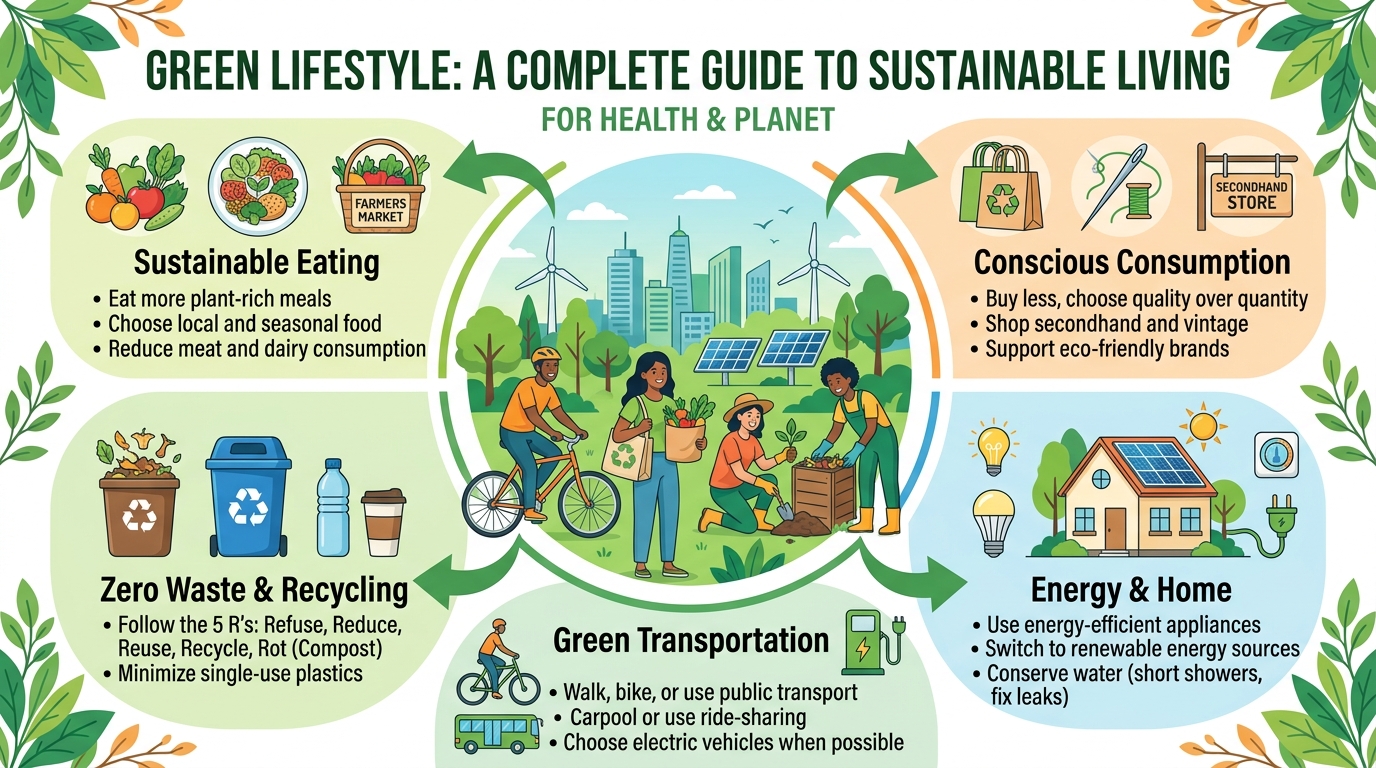
A green lifestyle is built on the principles of reducing resource consumption, minimizing waste, choosing renewable and non-toxic products, supporting ethical supply chains, and aligning daily actions with long-term ecological balance. It rejects the disposable, extractive, and polluting patterns of modern consumer culture in favor of circular, regenerative, and mindful living. Key concepts include the five Rs: Refuse, Reduce, Reuse, Repurpose, Recycle. A green lifestyle is not about perfection but about consistent progress toward lower environmental impact and higher quality of life.
Core Principles of a Green Lifestyle
| Principle | Description | Practical Application |
|---|---|---|
| Reduce Consumption | Use fewer resources overall | Buy only what you truly need |
| Waste Elimination | Send nothing to landfill unnecessarily | Compost organics, recycle properly |
| Energy Efficiency | Use less energy for same tasks | LED bulbs, efficient appliances |
| Renewable Resources | Prefer materials that regrow | Bamboo, wool, cork over plastics |
| Non-Toxic Living | Avoid chemicals harmful to health | Natural cleaning products |
| Local and Seasonal | Reduce transport emissions | Farmers markets, seasonal eating |
| Longevity and Repair | Keep items usable longer | Repair clothes, electronics, furniture |
| Ethical Supply Chains | Know where products come from | Fair trade, B Corp certifications |
Environmental Impact of Conventional Living
Understanding why a green lifestyle matters requires examining the impact of standard Western consumption patterns:
| Activity | Average Annual Impact per Person | Green Alternative Impact Reduction |
|---|---|---|
| Diet (meat-heavy) | 2.5 tons CO2 equivalent | Plant-based diet reduces by 50-80% |
| Personal vehicle use | 4.6 tons CO2 | Public transit/biking reduces by 90% |
| Household energy | 6 tons CO2 | Renewable energy + efficiency reduces by 70% |
| Consumer goods | 3 tons CO2 | Buying used + minimalism reduces by 80% |
| Air travel (one round trip) | 1-3 tons CO2 per flight | Virtual meetings or train reduces by 90% |
| Plastic waste | 100+ kg | Zero waste reduces by 90% |
The Seven Pillars of a Green Lifestyle
Green Food Choices
Food production accounts for approximately 25% of global greenhouse gas emissions. Green eating focuses on:
- Plant-forward meals with reduced meat and dairy
- Locally grown seasonal produce
- Organic when feasible to reduce pesticide exposure
- Minimally packaged foods purchased in bulk
- Home cooking to avoid takeout containers
- Growing some of your own food
- Reducing food waste through meal planning and proper storage
| Food Choice | Environmental Impact | Health Impact |
|---|---|---|
| Beef | Very high (carbon, water, land) | High saturated fat |
| Pork/Chicken | Moderate | Moderate |
| Legumes (beans, lentils) | Low | Excellent (fiber, protein) |
| Vegetables | Low | Excellent |
| Local seasonal produce | Very low | Excellent |
| Imported out-of-season | High (transport, storage) | Good |
Green Transportation
Transportation accounts for 15-20% of global emissions. Green transportation priorities:
- Walking for trips under 1 mile
- Biking for trips under 5 miles
- Public transit for longer urban trips
- Carpooling and ride sharing
- Electric vehicles charged with renewable energy
- Trip chaining (combining errands)
- Remote work to eliminate commuting
Green Home and Energy
Homes offer massive opportunities for greening:
- Energy efficiency: LED lighting, insulation, weather stripping, Energy Star appliances
- Renewable energy: Solar panels, green power purchasing from utility
- Water conservation: Low-flow fixtures, rain barrels, drought-tolerant landscaping
- Non-toxic materials: No-VOC paints, natural flooring (wood, cork, wool), solid wood furniture
- Passive heating and cooling: Window coverings, shade trees, cross-ventilation
Green Personal Care and Cleaning
Conventional products contain numerous synthetic chemicals. Green alternatives include:
| Conventional Product | Green Alternative | Benefit |
|---|---|---|
| Multi-surface cleaner | Vinegar and water | Non-toxic, cheap |
| Laundry detergent | Soap nuts or eco-detergent | Biodegradable |
| Plastic toothbrush | Bamboo toothbrush | Compostable handle |
| Synthetic deodorant | Baking soda or crystal deodorant | No aluminum |
| Plastic shampoo bottle | Shampoo bar | Zero plastic waste |
| Disposable razors | Safety razor | Metal lasts decades |
Green Clothing and Fashion
Fast fashion is extremely polluting. Green clothing principles:
- Buy fewer, higher quality items
- Choose natural fibers (cotton, linen, wool, hemp) over synthetics (polyester, nylon)
- Shop second-hand (thrift stores, online resale)
- Repair clothing instead of discarding
- Wash in cold water and line dry
- Donate or textile recycle worn items
- Support ethical brands with transparent supply chains
Green Waste Management
The zero waste hierarchy guides green waste practices:
- Refuse what you do not need (junk mail, freebies, single-use items)
- Reduce what you do need (smaller portions, concentrated products)
- Reuse by choosing reusable over disposable (bags, bottles, containers)
- Repair items that break
- Rot organic waste through composting
- Recycle only after higher options are exhausted
Green Community and Advocacy
Individual actions matter but collective action multiplies impact:
- Join or start a community garden
- Participate in tool libraries and sharing economies
- Support local green businesses
- Vote for pro-environmental candidates and policies
- Advocate for bike lanes, public transit, and renewable energy
- Educate others through example and conversation
Health Benefits of a Green Lifestyle
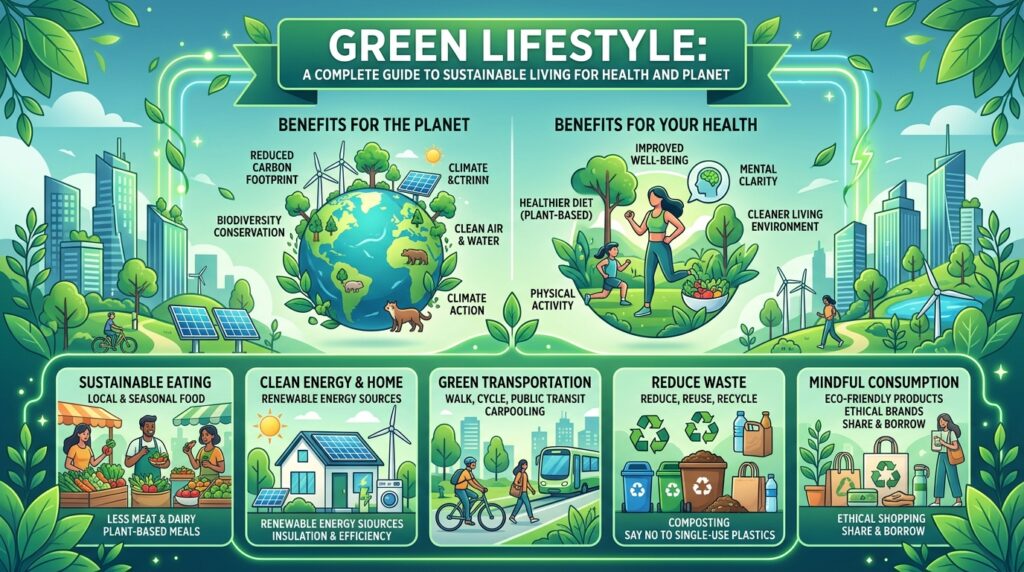
A green lifestyle is not just good for the planet; it is directly beneficial for personal health:
| Green Practice | Health Benefit |
|---|---|
| Walking and biking | Cardiovascular fitness, weight management, mental health |
| Plant-rich diet | Lower rates of heart disease, diabetes, cancer |
| Reduced plastic use | Lower exposure to endocrine disruptors (BPA, phthalates) |
| Natural cleaning products | Reduced respiratory irritation and chemical exposure |
| Time outdoors | Vitamin D, stress reduction, improved mood |
| Local seasonal food | Higher nutrient density, lower pesticide residues |
| Reduced consumerism | Less financial stress, more free time |
| Composting and gardening | Physical activity, fresh produce, connection to nature |
How to Start Your Green Lifestyle Journey
| Phase | Timeframe | Actions |
|---|---|---|
| Week 1 | Assessment | Track waste, energy use, transportation, food purchases |
| Week 2 | Easy swaps | Reusable bags, water bottle, coffee cup; turn off lights |
| Month 1 | Habit building | Meatless days, line drying laundry, recycling correctly |
| Month 2-3 | Home improvements | LED bulbs, weather stripping, low-flow showerhead |
| Month 4-6 | Major changes | Compost setup, second-hand shopping, energy audit |
| Year 1 | Lifestyle integration | Solar panels, electric vehicle, home vegetable garden |
Common Obstacles and Solutions
| Obstacle | Green Solution |
|---|---|
| Budget constraints | Many green practices save money (line drying, less meat, fewer new purchases) |
| Renting (cannot modify home) | Portable green choices: energy strips, window insulation kits, houseplants |
| No recycling program | Contact local government, start workplace recycling, reduce waste instead |
| Time pressure | Batch tasks (meal prep, shopping trips), choose convenience green options |
| Family resistance | Start with your own choices, share benefits, compromise on high-impact areas |
| Rural living with long drives | Carpool, combine trips, electric vehicle, remote work, local purchases |
Measuring Your Green Lifestyle Progress
| Metric | Baseline (Average) | Green Target | How to Track |
|---|---|---|---|
| Household waste | 4-5 pounds/day | Under 1 pound/day | Weigh trash weekly |
| Energy use | 30 kWh/day | 15 kWh/day | Utility bills |
| Water use | 100 gallons/day | 50 gallons/day | Water bill |
| Meat meals | 10+ per week | 3 or fewer per week | Meal journal |
| Vehicle miles | 200+ per week | Under 100 per week | Odometer log |
| New purchases | 50+ items/year | Under 20 items/year | Spending tracking |
Frequently Asked Questions (FAQs)
Q1: Is a green lifestyle expensive?
A1: Many green practices save money immediately: walking instead of driving, line drying clothes, reducing meat, using reusable items, and buying less. Some upfront investments (solar panels, efficient appliances) pay back over time. The greenest choice is often not buying anything at all.
Q2: Can one person’s green lifestyle really make a difference?
A2: Yes through three mechanisms: direct impact (your personal emissions reduced), influence on others (friends and family adopt practices), and collective action (voting and advocacy for systemic change). If every American reduced meat consumption by one meal per week, the emissions reduction would equal taking 7.5 million cars off the road.
Q3: What is the single most impactful green lifestyle change?
A3: For most people in developed countries, eliminating air travel and reducing personal vehicle use produce the largest carbon reductions. For those who do not travel frequently, shifting to a plant-rich diet is most impactful.
Q4: How do I handle greenwashing (false environmental claims)?
A4: Look for specific, third-party certified claims (USDA Organic, Energy Star, Fair Trade, B Corp, Leaping Bunny). Be skeptical of vague terms like “eco-friendly,” “natural,” or “green.” Research brands through resources like Good On You for clothing or EWG for personal care.
Q5: Is recycling enough?
A5: No. Recycling is low on the waste hierarchy. Reducing and reusing are far more effective. Most plastics are downcycled or landfilled despite recycling efforts. Focus first on refusing and reducing.
Q6: How do I live green in an apartment with no outdoor space?
A6: Indoor herb garden on a windowsill, vermicomposting (worm bin) for food scraps, join a community garden, use shared compost drop-off sites, choose renewable energy through your utility, and focus on green habits within your control.
Q7: What about green lifestyle for families with children?
A7: Children adapt quickly. Cloth diapers, reusable lunch containers, hand-me-down clothing, walking to school, library books instead of new purchases, and teaching repair skills. Children raised green often become lifelong environmental stewards.
Q8: How does a green lifestyle affect my carbon footprint?
A8: A committed green lifestyle can reduce an individual’s carbon footprint from the developed world average of 15 tons CO2 per year to under 4 tons. With extreme commitment (no car, no flights, plant-based, renewable energy), under 2 tons is possible.
Q9: Can I trust compostable or biodegradable plastic alternatives?
A9: Many require industrial composting facilities to break down. Home compostable items are clearly labeled. Biodegradable plastic often fragments into microplastics. Best to refuse all single-use items regardless of claims.
Q10: Where do I find community support for a green lifestyle?
A10: Local zero waste groups on social media, Transition Towns movement, Buy Nothing Project, local environmental nonprofits, farmers markets, repair cafés, and tool libraries. Online communities include Zero Waste Home, going zero waste blog, and r/ZeroWaste on Reddit.
Conclusion
A green lifestyle is not about deprivation or perfection. It is about alignment between daily actions and deep values of health, justice, and planetary stewardship. The practices described—eating plants, walking more, buying less, wasting nothing—are not sacrifices but upgrades. People who adopt green lifestyles report greater satisfaction, stronger community connections, lower financial stress, and improved physical and mental health. The transition does not happen overnight. Start with one drawer, one meal, one errand. Replace rather than discard. Celebrate progress. The planet does not need a few people doing zero waste perfectly. It needs millions doing it imperfectly. Your choices matter. Your example matters. Your voice matters. Begin today.
Leave a Reply