Introduction
Holistic health is a comprehensive approach to wellness that considers the entire person—body, mind, spirit, and emotions—rather than focusing solely on physical symptoms or specific diseases. Unlike conventional medicine which often treats isolated health issues, holistic health recognizes that all aspects of a person’s life interact and influence overall well-being. This ancient yet increasingly validated approach draws from multiple healing traditions including Ayurveda, Traditional Chinese Medicine, naturopathy, functional medicine, and integrative health practices. This article provides a complete evidence-based guide to understanding and implementing holistic health principles for optimal wellness.
What Is Holistic Health?
Holistic health is rooted in the understanding that human beings are complex, interconnected systems. A problem in one area of life—whether physical pain, emotional trauma, poor diet, toxic relationships, or spiritual disconnection—can manifest as illness elsewhere. Holistic practitioners work to identify and address root causes rather than suppressing symptoms. The word “holistic” derives from the Greek “holos,” meaning whole or entire. This philosophy treats health not merely as the absence of disease but as a state of complete physical, mental, social, and spiritual well-being.
Core Principles of Holistic Health
| Principle | Description | Practical Application |
|---|---|---|
| Wholeness | All parts of a person are interconnected | Address lifestyle, diet, emotions, and environment together |
| Prevention | Building health proactively is superior to fighting disease | Regular wellness practices before illness occurs |
| Root Cause Resolution | Identify and treat underlying causes, not symptoms | Investigate diet and stress for headaches instead of taking painkillers |
| Individuality | Each person has unique needs and healing pathways | Personalized wellness plans, not one-size-fits-all protocols |
| Healing Power of Nature | The body has innate self-repair mechanisms | Support natural processes with proper nutrition, rest, and movement |
| Integration | Combine best practices from various healing systems | Use nutrition, herbs, acupuncture, and conventional medicine as needed |
| Patient Empowerment | Education and self-care are essential | Learn to cook healing meals, practice stress reduction, monitor own health |
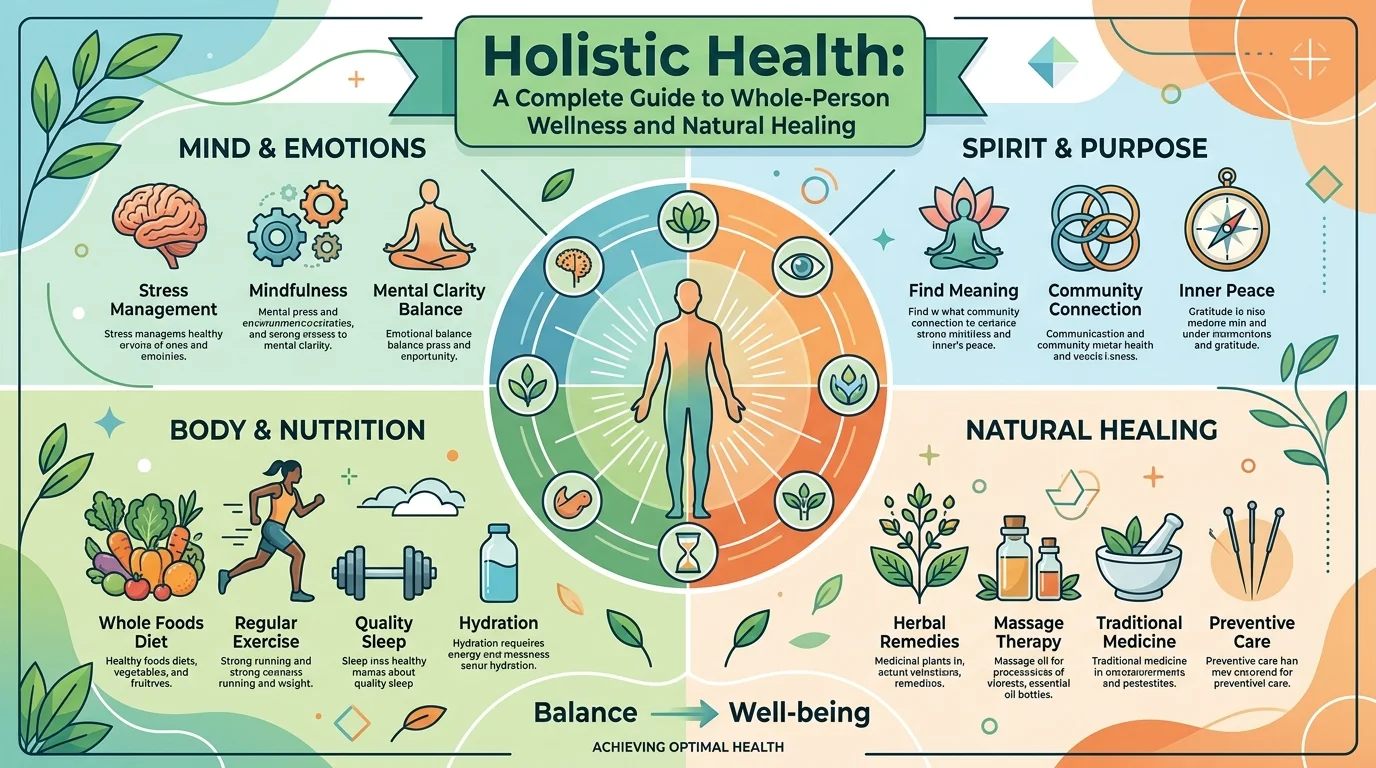
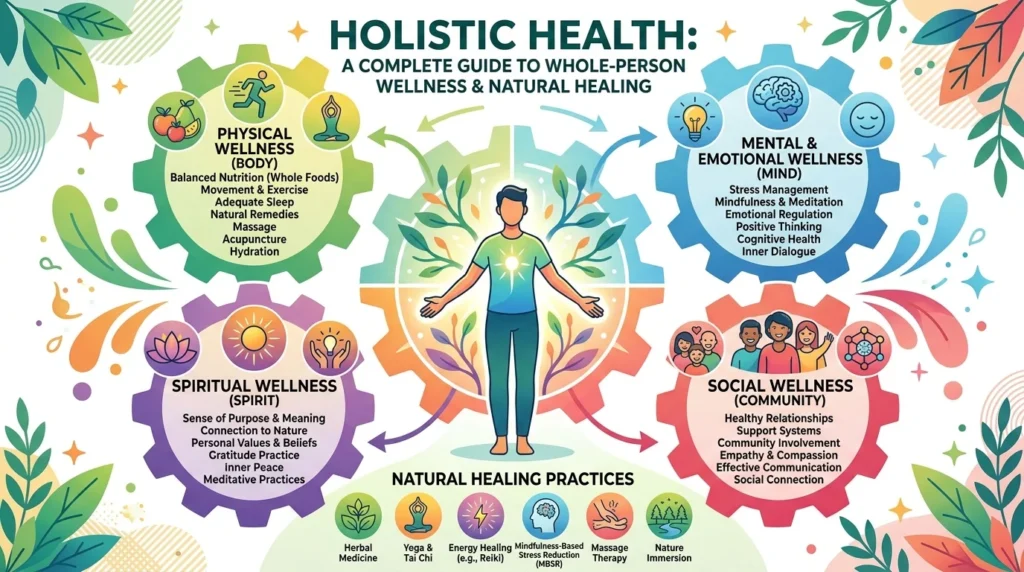
The Five Pillars of Holistic Health
Physical Health
Physical health is the foundation of holistic wellness. This pillar includes nutrition, exercise, sleep, hygiene, and the absence of disease or pain. Key components include:
- Whole food, plant-rich eating patterns
- Regular movement appropriate to individual capacity
- Adequate restorative sleep (7-9 hours for most adults)
- Proper hydration with clean water
- Avoidance of toxins in food, water, air, and household products
- Regular physical examinations and preventive screenings
Mental Health
Mental health encompasses cognitive function, emotional regulation, learning capacity, and stress management. Important practices include:
- Continuous learning and mental stimulation
- Stress reduction through breathwork and mindfulness
- Cognitive behavioral skills for negative thought patterns
- Adequate downtime and mental rest
- Addressing attention, memory, and concentration issues
Emotional Health
Emotional health involves awareness and acceptance of feelings, ability to express emotions appropriately, and capacity for resilience. Key elements:
- Emotional literacy (naming and understanding feelings)
- Healthy expression without suppression or explosion
- Processing past trauma and grief
- Developing emotional resilience and regulation skills
- Building empathy for self and others
Social Health
Humans are inherently social beings. Social health includes quality of relationships, community connections, and sense of belonging. Components include:
| Aspect | Healthy Indicator | Unhealthy Indicator |
|---|---|---|
| Family relationships | Supportive, respectful communication | Conflict, criticism, emotional neglect |
| Friendships | Mutual trust and reciprocity | One-sided, draining interactions |
| Community | Active participation, sense of belonging | Isolation, loneliness |
| Work relationships | Collaborative, respectful environment | Bullying, toxic competition |
| Boundaries | Clear, maintained, respected | Enmeshed or rigid boundaries |
Spiritual Health
Spiritual health does not require religious affiliation. It refers to sense of meaning, purpose, connection to something larger than oneself, and alignment with personal values. Practices include:
- Meditation or contemplative practice
- Time in nature
- Journaling on values and purpose
- Acts of service or compassion
- Exploration of personal beliefs and ethics
- Practices of gratitude and forgiveness
The Holistic Health Assessment Framework
Holistic practitioners use detailed assessments to identify imbalances across all life domains. A typical assessment covers:
| Domain | Questions Asked |
|---|---|
| Physical | Diet, exercise, sleep, pain, energy, digestion, medical history |
| Mental | Memory, concentration, learning style, thought patterns |
| Emotional | Mood fluctuations, emotional triggers, coping strategies, trauma history |
| Social | Living situation, support system, relationship quality, community involvement |
| Spiritual | Meaning, purpose, values, spiritual practices, sense of connection |
| Environmental | Home air and water quality, workplace safety, toxin exposure |
| Occupational | Work satisfaction, stress level, alignment with values, financial health |
Evidence Supporting Holistic Health Approaches
Research increasingly validates holistic health principles. Key findings include:
| Intervention | Condition | Evidence Quality |
|---|---|---|
| Mindfulness-based stress reduction | Anxiety, depression, chronic pain | Strong (multiple meta-analyses) |
| Mediterranean diet | Cardiovascular disease, cognitive decline | Very strong |
| Regular physical activity | Depression, diabetes, cardiovascular health | Very strong |
| Social connection | All-cause mortality, immune function | Strong |
| Sleep optimization | Mental health, metabolic health, immune function | Strong |
| Acupuncture | Chronic pain, post-operative nausea | Moderate to strong |
| Yoga | Low back pain, anxiety, stress | Moderate to strong |
The landmark INTERHEART study found that modifiable lifestyle factors—many central to holistic health—account for over 90% of population-attributable risk for heart attacks worldwide.
Holistic Health Modalities and Practices
Nutritional Approaches
- Whole foods, plant-forward eating
- Elimination of processed foods, refined sugars, industrial seed oils
- Food sensitivity identification and elimination
- Chrononutrition (eating aligned with circadian rhythms)
- Personalized nutrition based on genetics and biomarkers
Body-Based Therapies
| Modality | Primary Use | Mechanism |
|---|---|---|
| Acupuncture | Pain, stress, fertility | Nervous system modulation |
| Massage therapy | Muscle tension, stress, circulation | Mechanical and neurological effects |
| Chiropractic | Back pain, headaches | Spinal alignment and nerve function |
| Osteopathy | Musculoskeletal issues, general health | Manual medicine, whole-body approach |
| Craniosacral therapy | Headaches, trauma, stress | Cerebrospinal fluid rhythm |
Mind-Body Practices
- Meditation (focused attention, loving-kindness, body scan)
- Breathwork (diaphragmatic, box breathing, alternate nostril)
- Guided imagery and visualization
- Biofeedback and neurofeedback
- Hypnotherapy for pain and habit change
Energy Medicine
While controversial in conventional circles, many holistic traditions include energy healing:
- Reiki (Japanese energy healing)
- Therapeutic touch
- Qigong and Tai Chi (movement-based energy practices)
- Healing touch
How to Create a Personal Holistic Health Plan
Step 1: Self-Assessment
Complete a thorough inventory across all five pillars. Identify strengths and areas needing attention.
Step 2: Prioritize
Choose one to three areas to address first. Starting with sleep, nutrition, or stress often yields the greatest initial benefit.
Step 3: Set SMART Goals
Specific, Measurable, Achievable, Relevant, Time-bound goals for each priority area.
Step 4: Select Modalities
Choose evidence-based practices that resonate with your preferences and resources.
Step 5: Build Routine
Integrate practices into daily and weekly schedules. Small consistent actions outperform occasional intensive efforts.
Step 6: Track and Adjust
Monitor progress weekly. Adjust approach based on results and changing needs.
Step 7: Build Support Team
Engage healthcare providers, coaches, or community members who support holistic principles.
Holistic Health vs. Conventional Medicine
| Aspect | Holistic Health | Conventional Medicine |
|---|---|---|
| Focus | Whole person, root causes | Specific symptoms, disease |
| Timeline | Long-term prevention and optimization | Acute intervention, crisis management |
| Patient role | Active partner, empowered self-healer | Passive recipient of care |
| Tools | Lifestyle, nutrition, herbs, mind-body practices | Pharmaceuticals, surgery, radiation |
| Evidence base | Growing, includes traditional use and observational studies | Large randomized controlled trials |
| Best for | Chronic disease prevention, lifestyle management, mild conditions | Trauma, severe infections, emergencies, surgical needs |
| Cost | Often lower, but may be out-of-pocket | Often higher, but frequently covered by insurance |
These approaches are complementary, not oppositional. Many holistic health advocates use conventional medicine for acute emergencies while relying on holistic practices for prevention and chronic condition management.
Risks and Limitations of Holistic Health
Holistic approaches are generally safe but carry specific risks:
- Delaying effective conventional treatment for serious conditions
- Financial exploitation by unqualified practitioners
- Herb-drug interactions when combining approaches
- Lack of standardized training across many holistic modalities
Always maintain a primary care relationship and disclose all holistic practices to your medical providers. Use evidence-informed practitioners with recognized credentials (MD, DO, ND, LAc, certified health coach).
Frequently Asked Questions (FAQs)
Q1: Is holistic health scientifically proven?
A1: Many individual components (nutrition, exercise, sleep, meditation, social connection) have strong scientific support. The holistic principle of whole-person integration is supported by systems biology and psychoneuroimmunology research, though more studies on comprehensive holistic programs are needed.
Q2: Does holistic health reject conventional medicine?
A2: No. Evidence-based holistic health integrates the best of both worlds. It uses conventional medicine for emergencies and severe illness while emphasizing natural, lifestyle-based approaches for prevention and chronic conditions.
Q3: How do I find a qualified holistic health practitioner?
A3: Look for licensed integrative medicine physicians (MD or DO with additional training), naturopathic doctors (ND), functional medicine certified practitioners, or licensed acupuncturists (LAc). Avoid practitioners who claim to cure all diseases or who advise stopping prescribed medications.
Q4: How much does holistic health cost?
A4: Basic practices like whole food cooking, walking, meditation, and sleep hygiene cost little to nothing. Professional consultations range from 100−500 per visit and are often not covered by insurance. However, many preventive holistic practices reduce long-term healthcare expenses.
Q5: Can holistic health help with mental illness?
A5: Yes, but as part of a comprehensive plan. Nutrition, exercise, sleep, social connection, and stress reduction all improve mental health outcomes. However, severe depression, bipolar disorder, or schizophrenia often require conventional psychiatric medication alongside holistic practices.
Q6: How long until I see results from holistic health practices?
A6: Sleep improvements often occur within days. Stress reduction and mood changes may take 2-4 weeks. Chronic health conditions may require 3-6 months of consistent practice. Physical fitness and metabolic changes take 8-12 weeks.
Q7: Is holistic health the same as alternative medicine?
A7: Not exactly. Alternative medicine replaces conventional treatment. Holistic health integrates conventional and complementary approaches, using each where most appropriate. Integrative medicine is the preferred modern term.
Q8: Can children benefit from holistic health?
A8: Absolutely. Whole foods, outdoor play, adequate sleep, limited screen time, and emotional coaching are holistic health practices for children that establish lifelong wellness patterns.
Q9: What is the difference between holistic health and functional medicine?
A9: Functional medicine is a specific systems-based approach practiced by licensed healthcare providers, using advanced lab testing to identify root causes. Holistic health is a broader philosophy encompassing many practices, some of which may not require professional training.
Q10: Where do I start with holistic health?
A10: Begin with the foundational four: prioritize 7-8 hours of sleep nightly, walk outdoors for 30 minutes daily, eat one meal of whole plant foods, and practice 5 minutes of deep breathing. Master these before adding other modalities.
Conclusion
Holistic health represents a return to ancient wisdom validated by modern science. The understanding that human health emerges from the dynamic interaction of body, mind, emotions, relationships, and environment is not merely philosophical but practical and powerful. Chronic diseases that plague modern society—heart disease, diabetes, depression, autoimmune conditions—rarely have single causes and rarely respond to single interventions. They develop from imbalances across multiple life domains and require comprehensive, personalized, whole-person approaches for resolution. Holistic health does not demand rejection of conventional medicine but rather its intelligent integration with lifestyle, nutrition, mind-body practices, and social connection. The evidence is clear: people who eat whole foods, move regularly, sleep sufficiently, manage stress, maintain strong relationships, and live with purpose enjoy longer, healthier, and more satisfying lives. Start where you are. Use what you have. Do what you can. Your whole self will thank you.
Leave a Reply