Introduction
Natural wellness refers to the practice of maintaining and restoring health using methods derived from nature, traditional knowledge systems, and lifestyle habits that align with the human body’s innate healing capacities. Unlike conventional medicine that often relies on synthetic drugs and invasive procedures, natural wellness emphasizes prevention, self-care, nutrition, herbal remedies, physical activity, stress management, and environmental harmony. This article explores the core principles, evidence-based benefits, practical applications, and common modalities of natural wellness, providing a complete roadmap for anyone seeking to optimize their health without artificial chemicals or unnecessary medical interventions.
What Is Natural Wellness?
Natural wellness is a holistic approach to health that treats the entire person—body, mind, and spirit—rather than isolated symptoms. It draws from disciplines such as herbalism, nutritional therapy, traditional Chinese medicine, Ayurveda, naturopathy, and lifestyle medicine. The fundamental belief is that the human body possesses an inherent ability to heal itself when given the right conditions: whole foods, clean water, sunlight, fresh air, restful sleep, movement, emotional balance, and connection to nature. Natural wellness does not reject modern medicine entirely but integrates safe, natural methods as first-line approaches for prevention and treatment of common ailments.
Core Principles of Natural Wellness
| Principle | Description | Practical Application |
|---|---|---|
| First, do no harm | Use non-invasive, low-risk interventions before stronger measures | Start with diet changes before supplements |
| Healing power of nature | Trust the body’s self-repair mechanisms | Support fever and inflammation rather than suppressing them |
| Identify and treat the cause | Address root issues, not just symptoms | Investigate food sensitivities instead of taking antacids |
| Treat the whole person | Consider physical, emotional, social, and environmental factors | Combine counseling with nutrition for depression |
| Prevention is best medicine | Build health proactively | Establish daily wellness rituals before illness occurs |
| Doctor as teacher | Empower patients with knowledge and self-care skills | Learn to prepare herbal teas and nutrient-dense meals |
Major Components of Natural Wellness
Nutrition as Medicine
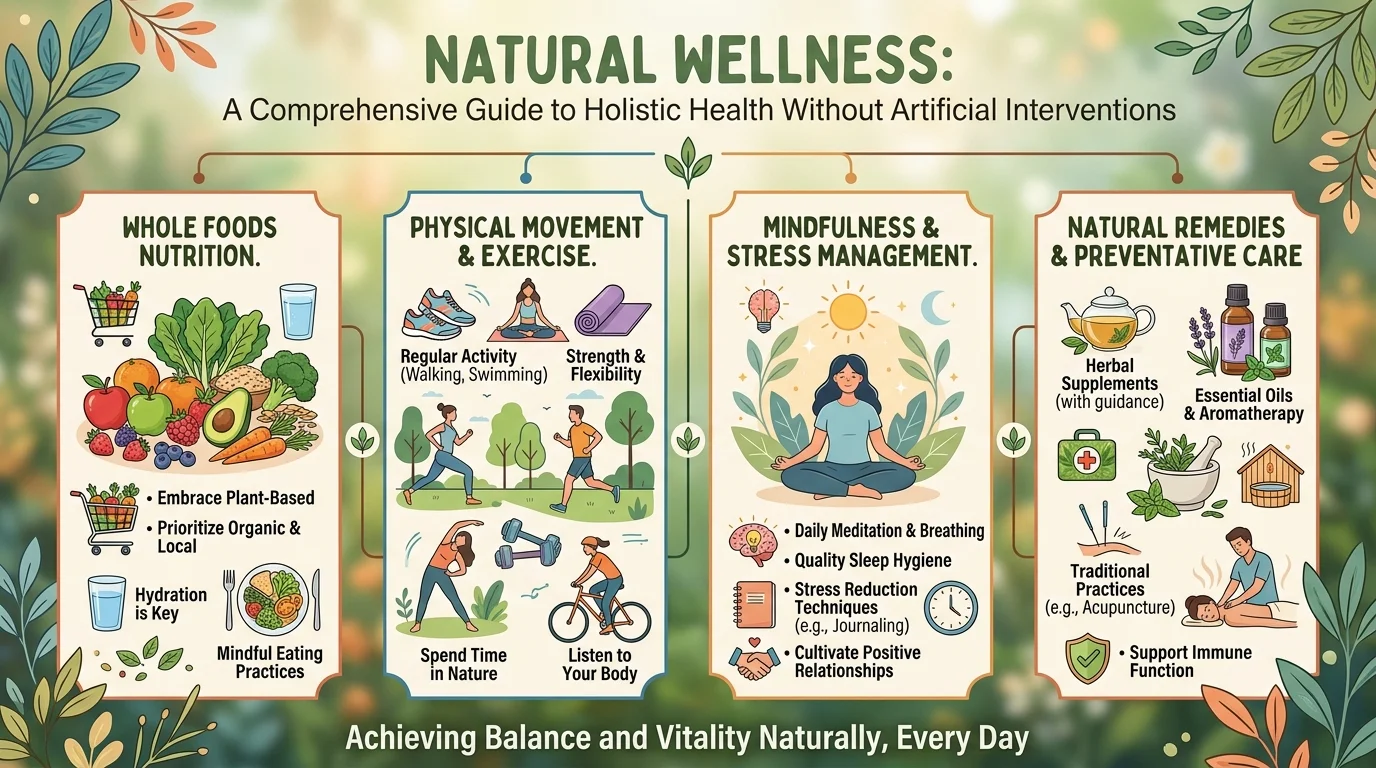
Whole, unprocessed foods form the foundation of natural wellness. A diet rich in vegetables, fruits, legumes, nuts, seeds, whole grains, and clean protein sources provides phytonutrients, antioxidants, fiber, and essential fatty acids. Key principles include eating seasonally, preferring organic when possible, avoiding industrial seed oils, limiting refined sugar, and staying hydrated with pure water. Intermittent fasting, mindful eating, and food combining are additional strategies used in natural wellness.
Herbal Medicine
Plants have been used for healing for thousands of years, and modern research confirms many traditional uses. Common natural wellness herbs include:
| Herb | Primary Use | Form |
|---|---|---|
| Chamomile | Anxiety, insomnia | Tea, tincture |
| Echinacea | Immune support for colds | Tincture, capsules |
| Turmeric | Inflammation, joint pain | Powder, golden milk |
| Ginger | Nausea, digestion | Fresh root, tea |
| Ashwagandha | Stress adaptation | Powder, capsules |
| Milk thistle | Liver health | Tincture, seeds |
| Garlic | Cardiovascular, antimicrobial | Raw cloves, aged extract |
Physical Activity and Movement
Natural wellness promotes movement patterns that mimic human evolutionary biology: walking, running, squatting, climbing, lifting, stretching, and playing. Regular moderate activity reduces chronic disease risk, improves mood, supports lymphatic drainage, and maintains musculoskeletal health. Outdoor exercise provides added benefits of sunlight and fresh air. Rest days and sleep are equally valued for tissue repair and hormonal balance.
Stress Management and Emotional Health
Chronic stress is a primary driver of modern disease. Natural wellness addresses this through breathwork (diaphragmatic breathing, alternate nostril breathing), meditation, time in nature, social connection, creative expression, and adequate sleep. Adaptogenic herbs like rhodiola and holy basil help the body resist stress effects. Journaling, gratitude practices, and digital detoxes are simple, cost-free tools.
Sleep Hygiene
Restorative sleep is non-negotiable in natural wellness. Key practices include consistent bedtimes, complete darkness, cool room temperature, no screens before bed, morning sunlight exposure, and avoiding caffeine after noon. Herbal aids like valerian root, passionflower, and magnesium-rich foods (dark leafy greens, pumpkin seeds) support natural sleep cycles without pharmaceutical sedatives.
Environmental Health
Natural wellness recognizes that toxins in air, water, food, and household products undermine health. Practical steps include using glass instead of plastic, filtering tap water, choosing natural cleaning products (vinegar, baking soda, essential oils), reducing electromagnetic field exposure, and improving indoor air quality with plants and open windows.

Evidence-Based Benefits of Natural Wellness
| Health Area | Benefit | Key Evidence |
|---|---|---|
| Cardiovascular | Lower blood pressure and cholesterol | Mediterranean diet studies, garlic research |
| Metabolic | Improved insulin sensitivity | Fiber-rich whole foods, regular movement |
| Digestive | Reduced bloating and irregularity | Probiotic foods, herbal bitters |
| Immune | Fewer and shorter infections | Echinacea meta-analyses, vitamin D from sun |
| Mental | Reduced anxiety and depression | Exercise, meditation, omega-3 fatty acids |
| Pain | Decreased chronic pain | Turmeric for arthritis, ginger for muscle soreness |
| Longevity | Lower all-cause mortality | Plant-based diets, social connection |
Comparison: Natural Wellness vs. Conventional Approach
| Aspect | Natural Wellness | Conventional Medicine |
|---|---|---|
| Focus | Prevention and root causes | Symptom management |
| Timeline | Long-term lifestyle changes | Quick fixes, acute care |
| Tools | Food, herbs, movement, mind-body practices | Pharmaceuticals, surgery, radiation |
| Side effects | Minimal when used correctly | Often significant |
| Cost | Low to moderate | High |
| Evidence | Traditional use plus growing modern research | Large clinical trials |
| Best for | Chronic conditions, prevention, mild illnesses | Emergencies, severe infections, trauma |
Natural wellness works alongside conventional medicine. For example, a cancer patient may use nutrition and stress reduction during chemotherapy, not instead of it.
Common Natural Wellness Protocols for Everyday Ailments
For Colds and Flu
Rest, hydration, bone broth, ginger tea with raw honey, nasal saline rinse, zinc lozenges (after meals), vitamin C from citrus and bell peppers, and echinacea tincture at first sign of symptoms. Avoid dairy and sugar during active infection.
For Digestive Discomfort
Peppermint or fennel tea after meals, fermented vegetables (sauerkraut, kimchi) daily, abdominal self-massage, walking after eating, and identifying trigger foods through an elimination diet. Avoid eating while stressed.
For Headaches
Identify triggers (dehydration, eye strain, poor posture, food additives). Apply peppermint essential oil diluted on temples. Drink water with a pinch of salt. Rest in a dark, quiet room. For tension headaches, neck stretches and warm compresses.
For Poor Sleep
Morning sunlight exposure within 30 minutes of waking. No caffeine after 2 PM. No screens for 90 minutes before bed. Magnesium glycinate or Epsom salt bath. Consistent wake time even on weekends.
How to Start Your Natural Wellness Journey
Step 1: Assess your current habits. Track food, sleep, stress, and activity for one week.
Step 2: Make one change at a time. Start with hydration or walking daily.
Step 3: Remove one processed food item each week.
Step 4: Add one herbal tea or whole food daily.
Step 5: Create a morning and evening routine.
Step 6: Find community or an accountability partner.
Step 7: Learn from reputable sources. Avoid social media wellness influencers without credentials.
Step 8: Listen to your body. No two people have identical needs.
Risks and Precautions
Natural does not automatically mean safe. Herbs can interact with prescription medications. Some plants are toxic if misidentified. Pregnant or nursing women, children, elderly individuals, and those with chronic illnesses should consult qualified practitioners (naturopathic doctors, clinical herbalists) before starting new protocols. Quality matters: buy herbs from reputable sources to avoid heavy metals or adulteration. Start with low doses and increase gradually.
Frequently Asked Questions (FAQs)
Q1: What is the difference between natural wellness and naturopathy?
A1: Natural wellness is a lifestyle approach anyone can practice. Naturopathy is a licensed medical profession that includes diagnosis, prescription of natural treatments, and in some regions, prescription drugs.
Q2: Can natural wellness cure chronic diseases like diabetes or arthritis?
A2: It can significantly improve outcomes, reduce medication needs, and in some cases reverse type 2 diabetes through diet and lifestyle. However, work with a medical doctor and do not abandon prescribed treatments abruptly.
Q3: Is organic food necessary for natural wellness?
A3: No, but it reduces pesticide exposure. If budget is limited, prioritize organic for the Dirty Dozen (strawberries, spinach, kale, etc.) and buy conventional for the Clean Fifteen.
Q4: How do I know which herbs are right for me?
A4: Consult a clinical herbalist or naturopathic doctor. Start with gentle, well-studied herbs like chamomile or ginger. Avoid buying proprietary blends with many ingredients.
Q5: Can children practice natural wellness?
A5: Yes, but with child-appropriate doses and herbs. Many pediatricians support whole foods, outdoor play, and limited screen time as natural wellness for children. Avoid strong herbs without professional guidance.
Q6: Is natural wellness expensive?
A6: It can be very affordable. Walking, sunlight, sleep, and filtered water cost nothing. Herbs grown at home or bought in bulk are cheaper than pharmaceuticals. The most expensive aspect is often buying whole, unprocessed foods.
Q7: How long until I see results?
A7: Some changes like better sleep occur within days. Metabolic and inflammatory improvements take 4-12 weeks. Chronic condition changes may take 6 months or longer of consistent practice.
Q8: Does natural wellness include supplements?
A8: Yes, but whole foods are preferred. Supplements should fill specific gaps (e.g., vitamin D in winter, B12 for vegans) rather than replace healthy eating.
Q9: Can I practice natural wellness while taking prescription medications?
A9: Yes, but inform your doctor and pharmacist about all herbs and supplements. Many interactions are possible, especially with blood thinners, antidepressants, and diabetes medications.
Q10: What is the single most important natural wellness practice?
A10: Whole food, plant-rich eating combined with daily walking outdoors. If you do nothing else, these two habits produce the greatest health returns.
Conclusion
Natural wellness is not a rejection of modern science but a return to fundamental truths about human health. The body evolved over millions of years in a natural environment, eating whole foods, moving frequently, sleeping in circadian rhythms, and living in community. Many chronic diseases of modern life arise precisely because we have abandoned these conditions. By systematically reintroducing natural methods—nutrient-dense food, medicinal plants, movement, stress management, restorative sleep, and environmental hygiene—most people can reduce symptoms, decrease medication dependence, improve energy, and extend healthspan. Start small, stay consistent, and trust the process. Your body knows how to heal when you give it what it truly needs.