Introduction
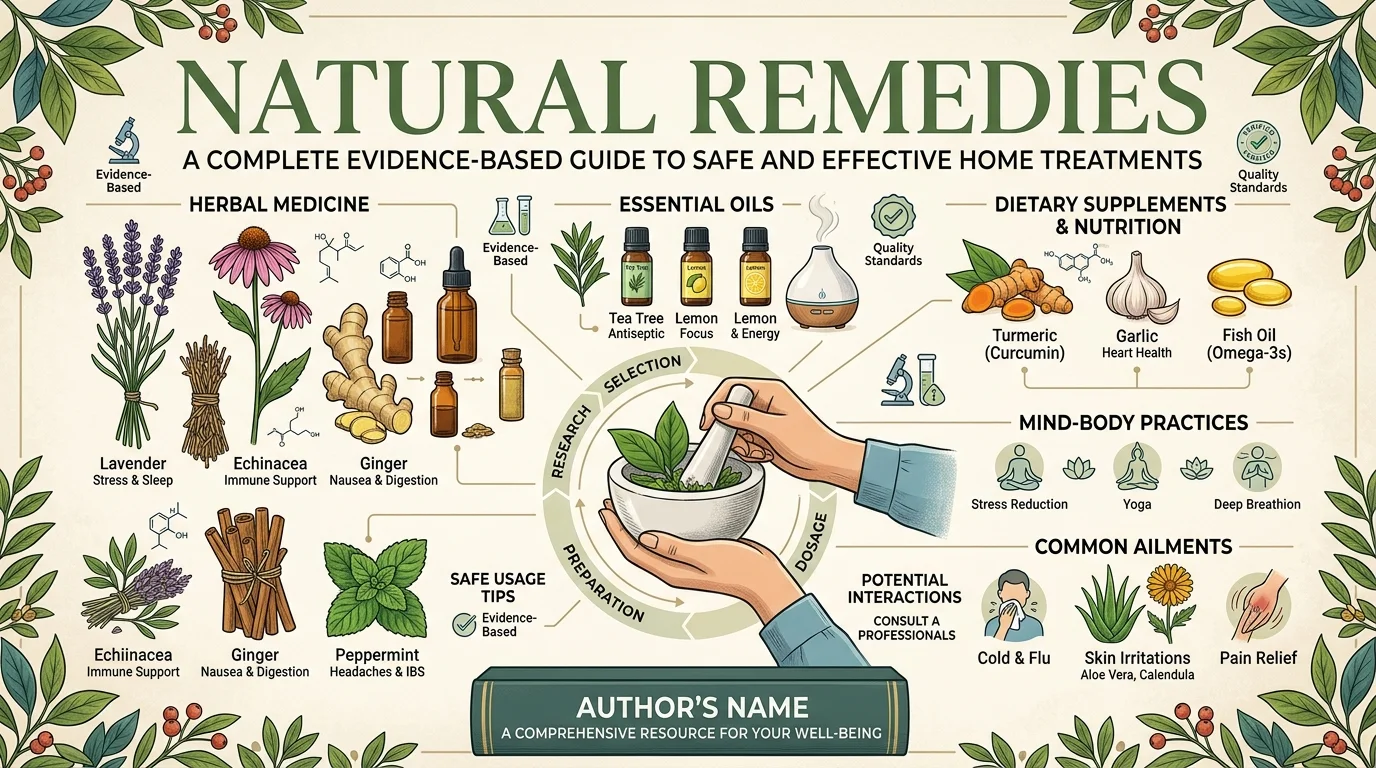
Natural remedies are plant-based or naturally derived treatments used to prevent, manage, or alleviate common health conditions without synthetic pharmaceutical drugs. For centuries, traditional healing systems including Ayurveda, Traditional Chinese Medicine, and Indigenous practices have relied on herbs, spices, and pantry staples to treat everything from nausea and insomnia to wound infections and joint pain. Today, modern science has begun validating many of these traditional uses, demonstrating that certain natural remedies offer genuine therapeutic benefits with fewer side effects than conventional medications. However, the word “natural” does not automatically guarantee safety or efficacy. This comprehensive guide examines evidence-based natural remedies, proper usage methods, safety considerations, and practical applications for common health concerns.
What Are Natural Remedies?
Natural remedies are treatments derived from plants, minerals, or other natural sources used for therapeutic purposes. They include herbs, spices, essential oils, foods, and household ingredients like honey, vinegar, and salt. Unlike prescription drugs that typically contain isolated synthetic compounds, natural remedies often consist of multiple bioactive phytochemicals that work synergistically to produce healing effects .
Natural remedies exist along a spectrum:
| Category | Examples | Regulation Level |
|---|---|---|
| Whole foods | Ginger, turmeric, garlic, honey | Minimal |
| Herbal supplements | Capsules, tinctures, standardized extracts | Dietary supplement regulation |
| Essential oils | Lavender, peppermint, eucalyptus oil | Limited oversight |
| Traditional preparations | Teas, decoctions, poultices | Unregulated |
It is critical to understand that “natural” has no legal definition on product labels. Unlike pharmaceutical drugs, most natural remedies and supplements do not require FDA approval or pre-market safety testing . This means products may not contain what the label claims, may be contaminated, and may not have been tested for effectiveness.
Evidence-Based Natural Remedies
The following remedies have been studied in clinical trials and demonstrate genuine therapeutic effects for specific conditions.
Ginger for Nausea and Inflammation
Ginger (Zingiber officinale) has been used for centuries in Ayurvedic and Traditional Chinese Medicine, and modern research strongly supports its effectiveness. Multiple studies have found that ginger significantly reduces nausea, particularly in pregnancy (morning sickness), post-surgery recovery, and chemotherapy-induced nausea .
| Condition | Evidence Strength | Recommended Form | Typical Dose |
|---|---|---|---|
| Morning sickness | Strong | Tea, capsules | 250-1000 mg daily |
| Post-chemotherapy nausea | Moderate | Capsules | 0.5-1.0 g before treatment |
| Muscle pain from exercise | Moderate | Fresh or powdered | 2 grams daily for 10 days |
Beyond nausea relief, ginger contains anti-inflammatory compounds called gingerols and shogaols. A study published in the Journal of Pain found that individuals who consumed two grams of raw ginger daily for 11 days experienced a 25 percent greater reduction in post-workout muscle pain compared to those who did not take ginger . Ginger works differently than nonsteroidal anti-inflammatory drugs (NSAIDs) by blocking the formation of specific inflammatory compounds without the gastrointestinal risks associated with medications like ibuprofen .
How to use: Fresh ginger tea (grate half an inch of raw ginger, steep in boiling water for 5-10 minutes), ginger capsules (250-1000 mg), or grated into meals. For nausea relief during pregnancy, consult a healthcare provider before use.
Turmeric (Curcumin) for Joint Pain and Inflammation
Turmeric (Curcuma longa) contains curcumin, a polyphenol with powerful anti-inflammatory and antioxidant properties. Several clinical studies have demonstrated that curcumin supplements are as effective as NSAIDs like ibuprofen for reducing arthritis symptoms .
| Study Finding | Comparison | Result |
|---|---|---|
| Knee osteoarthritis | 500 mg curcumin vs 50 mg diclofenac sodium | Curcumin equally effective |
| Arthritis pain | Curcumin vs ibuprofen | Comparable pain reduction |
| Inflammatory markers | Curcumin supplementation | Significant reduction in CRP |
The amount of curcumin in raw turmeric is only 2-3 percent by weight, so supplements standardized to 95 percent curcuminoids are more effective for therapeutic purposes. Importantly, curcumin absorption is poor unless consumed with black pepper, which contains piperine that increases bioavailability by up to 2000 percent .
How to use: Add turmeric to meals with a pinch of black pepper, take curcumin supplements standardized to 95 percent curcuminoids (500 mg twice daily), or prepare golden milk with turmeric, black pepper, and plant-based milk. Noticeable benefits typically appear after 4-8 weeks of consistent use .
Peppermint Oil for Digestive Disorders
Peppermint oil has muscle-relaxing properties that effectively soothe the gastrointestinal tract. Clinical trials consistently show that enteric-coated peppermint oil capsules significantly reduce symptoms of irritable bowel syndrome (IBS), including bloating, cramping, abdominal pain, and gas .
| Condition | Evidence Quality | Effect |
|---|---|---|
| Irritable Bowel Syndrome | Strong (superior to placebo) | Reduces abdominal pain and bloating |
| Functional dyspepsia | Moderate | Improves indigestion symptoms |
| Post-operative nausea | Preliminary | Reduces nausea when inhaled |
Peppermint activates an anti-pain channel in the colon, reducing inflammatory pain in the digestive tract. This mechanism likely explains its particular effectiveness for IBS .
How to use: Enteric-coated peppermint oil capsules (to prevent heartburn and ensure delivery to the intestines) at standard doses of 0.2-0.4 mL three times daily. Peppermint tea after meals can also provide mild digestive relief.
Honey for Cough and Sore Throat
Raw honey has natural antimicrobial, antibacterial, and antioxidant properties. Studies have shown that honey can be more effective than some over-the-counter cough medications, particularly for children over age one .
| Comparison | Finding |
|---|---|
| Honey vs dextromethorphan | Honey equally or more effective for nocturnal cough |
| Honey vs diphenhydramine | Honey superior for cough frequency and severity |
| Honey vs no treatment | Significant improvement in cough symptoms |
Dr. Mike Varshavski, a board-certified family physician, notes that “honey for nighttime cough performed as well or better than over-the-counter cough suppressants. It is natural, tastes good, and it works” .
Important safety note: Honey should never be given to infants under one year of age due to the risk of infant botulism (floppy baby syndrome) caused by Clostridium botulinum spores .
How to use: One teaspoon of raw honey straight or mixed into warm water, tea, or lemon water. For nighttime cough, take before bed. Manuka honey and darker varieties like buckwheat honey may have stronger antibacterial properties .
Lavender for Anxiety and Stress
Lavender (Lavandula angustifolia) is more than a pleasant scent. Clinical studies have demonstrated that lavender, particularly in the form of standardized oral supplements like Silexan, effectively reduces generalized anxiety disorder symptoms without the sedative and dependency risks of benzodiazepines .
| Form | Evidence | Use Case |
|---|---|---|
| Oral supplement (Silexan) | Strong | Generalized anxiety disorder |
| Aromatherapy (inhalation) | Moderate | Acute stress, sleep improvement |
| Topical (diluted oil) | Preliminary | Migraine, tension headache |
A study found that lavender inhalation helped reduce migraine attacks, lower anxiety and restlessness, and improve memory function under stress .
How to use: Diffuse lavender essential oil in a room, add 5-10 drops to a warm bath, dilute with carrier oil for massage, or take standardized lavender oil capsules (80 mg daily) under medical supervision. Always dilute essential oils before skin application.
Cranberry for Urinary Tract Infections
Cranberry products have demonstrated effectiveness in preventing recurrent urinary tract infections (UTIs), particularly in women. The active compounds, proanthocyanidins (PACs), prevent bacteria—especially E. coli—from adhering to the bladder wall .
| Finding | Evidence |
|---|---|
| UTI prevention in women with recurrent UTIs | Moderate effect |
| Mechanism confirmed | PACs prevent bacterial adhesion |
| Effective dose | 36 mg soluble PACs daily |
Dr. Rena Malik, a board-certified urologist, explains: “The cranberry itself has an active ingredient called proanthocyanidins. What it does is it sticks to bacteria in the bladder so that it prevents it from sticking to the bladder wall. You need to get supplements that have 36 mg of soluble proanthocyanidins or 100 percent cranberry juice and take it daily” .
Important note: While the Tulane University PharmWiki indicates that some reviews found cranberry not superior to placebo, the weight of evidence supports its use for prevention in specific populations, not for treatment of active infections . Cranberry does not cure existing UTIs—antibiotics are required for active infection.
Melatonin for Sleep Disorders
Melatonin is a hormone naturally produced by the pineal gland to regulate circadian rhythms. Supplemental melatonin has been extensively studied for various sleep disorders .
| Condition | Evidence | Recommended Dose |
|---|---|---|
| Jet lag | Strong | 0.5-5 mg at destination bedtime |
| Delayed sleep phase syndrome | Moderate | 0.5-3 mg 1-2 hours before desired bedtime |
| Insomnia (short-term) | Moderate | 0.5-3 mg 30-60 minutes before bed |
The effect size for melatonin is modest but clinically useful. It is particularly effective when used short-term to re-establish healthy sleep cycles after travel or schedule changes .
How to use: Start with the lowest effective dose (0.5-1 mg) 30-60 minutes before bedtime. Higher doses (3-5 mg) do not necessarily work better and may cause morning grogginess.
Vinegar for Skin and Foot Conditions
White vinegar has antimicrobial and antifungal properties that make it useful for several common conditions. Diluted vinegar can be used to clean wounds, treat foot fungus, address dandruff, and manage smelly feet .
| Condition | Preparation | Application |
|---|---|---|
| Athlete’s foot | 1 part vinegar to 3 parts water | Soak feet 15 minutes daily |
| Dandruff | 1:3 dilution | Rinse hair after shampooing |
| Minor wound cleaning | 1:3 dilution | Cleanse area gently |
| Sunburn relief | Cool vinegar solution | Apply with soft cloth |
Dr. Abigail Waldman, a dermatologist, states: “White vinegar can be diluted 1:3 with water and it has antimicrobial and antifungal effects. It can be used to clean wounds, for smelly feet, for foot fungus, and even for dandruff” .
Clove Oil for Dental Pain
Clove oil contains eugenol, a compound with natural numbing and antiseptic properties. It provides temporary relief for toothaches and dental pain until professional care is available .
How to use: Dab a small amount of clove oil on a cotton swab and apply directly to the painful tooth and surrounding gum. Do not swallow. Clove oil provides temporary pain relief but is not a substitute for dental treatment.
Additional Evidence-Based Remedies
| Remedy | Condition | Evidence | Notes |
|---|---|---|---|
| Capsaicin (chili peppers) | Topical pain relief | Moderate | Works by desensitizing pain receptors |
| Eucalyptus oil | Pain, congestion | Preliminary | May trigger asthma in sensitive individuals |
| Magnesium-rich foods | Muscle cramps, sleep | Strong (for deficiency) | Spinach, almonds, avocados, dark chocolate |
| Kiwi | Sleep quality | Moderate | Two kiwis one hour before bedtime |
| Tart cherry juice | Jet lag, sleep | Moderate | Natural source of melatonin |
Natural Remedies That May Not Work
Not all traditional remedies withstand scientific scrutiny. Several commonly used natural products have failed to demonstrate superiority over placebo in rigorous clinical trials .
| Supplement | Claim | Scientific Finding |
|---|---|---|
| Echinacea | Cold prevention and treatment | Not superior to placebo |
| Ginkgo biloba | Memory, dementia | Not superior to placebo |
| Ginseng | Mental performance, immunity | Not superior to placebo |
| Glucosamine/chondroitin | Joint health, arthritis | Not superior to placebo |
| Saw palmetto | Benign prostatic hyperplasia | Not superior to placebo |
| St. John’s Wort | Depression | Possibly effective but significant drug interactions |
Critical Safety Considerations
Natural does not equal safe. This is the most important principle of natural remedy use .
Herb-Drug Interactions
| Herb | Dangerous Interaction | Effect |
|---|---|---|
| St. John’s Wort | Birth control pills, antidepressants, blood thinners | Reduces drug effectiveness |
| Garlic (high dose) | Warfarin, antiplatelet drugs | Increased bleeding risk |
| Ginkgo biloba | Blood thinners, NSAIDs | Increased bleeding risk |
| Kava | Alcohol, sedatives | Liver damage, excessive sedation |
| St. John’s Wort | Cyclosporine (transplant patients) | Organ rejection risk |
Toxic and Dangerous Natural Products
Some “natural” products are directly harmful:
- Ephedra (Ma-huang) : Banned by the FDA due to cardiovascular and central nervous system complications, including deaths
- Foxglove (Digitalis) : Contains heart medication but the whole plant is deadly if consumed directly
- Kava : Associated with severe liver damage; FDA warnings issued
Regulatory Gaps
Unlike prescription medications, most natural remedies and supplements are not FDA-approved before market entry. The FDA does not check most supplements for :
- Accurate ingredient labeling
- Absence of contaminants
- Safety or effectiveness
What this means: Products may contain different ingredients than stated, incorrect doses, or contaminants including heavy metals and undeclared pharmaceutical drugs.
Natural Lifestyle Interventions
Some of the most effective “natural remedies” are not pills or potions at all but lifestyle practices supported by decades of research .
| Intervention | Health Benefits | Evidence Quality |
|---|---|---|
| Social connection | Lower mortality, reduced depression | Very strong |
| Time in nature (2+ hours weekly) | Improved well-being, lower stress | Strong |
| Regular exercise | Reduced anxiety, heart health, weight management | Very strong |
| Adequate sleep (7-9 hours) | Immune function, mental health, metabolic health | Very strong |
| Mindfulness and meditation | Lower blood pressure, improved sleep, pain reduction | Strong |
| Healthy whole-food diet | Disease prevention, energy, mood | Very strong |
When to See a Doctor
Natural remedies are appropriate for mild, self-limiting conditions. Seek professional medical care for:
- Severe or worsening symptoms
- High fever (over 101.5°F or 38.6°C for more than 48 hours)
- Chest pain or difficulty breathing
- Signs of infection requiring antibiotics
- Blood in stool, urine, or vomit
- Unexplained weight loss
- Any symptom that persists beyond 7-10 days
Frequently Asked Questions (FAQs)
Q1: Are natural remedies safe for everyone?
A1: No. Natural remedies can be unsafe for pregnant women, children, elderly individuals, people with liver or kidney disease, and those taking multiple medications. Always consult a healthcare provider before starting any new natural remedy, especially if you have underlying health conditions .
Q2: Can I take natural remedies with my prescription medications?
A2: Only under medical supervision. Many herbs interact with prescription drugs. St. John’s Wort, for example, reduces the effectiveness of birth control pills, antidepressants, and blood thinners. Garlic and ginkgo increase bleeding risk when combined with warfarin. Always disclose all natural remedies to your doctor and pharmacist .
Q3: How do I know if a natural remedy product is high quality?
A3: Look for third-party certification seals including USP Verified, ConsumerLab.com Approved, or NSF International. These indicate the product has been tested for purity, potency, and absence of contaminants. Avoid products that make miracle claims or have secret formulas .
Q4: How long do natural remedies take to work?
A4: Effects vary. Acute issues like nausea from ginger may respond within 30-60 minutes. Chronic conditions like arthritis pain with turmeric may require 4-8 weeks of consistent use before noticeable benefits appear. Sleep improvements with melatonin may occur within days .
Q5: Can natural remedies cure serious diseases like cancer or diabetes?
A5: No. There is no scientific evidence that any natural remedy alone cures cancer, diabetes, heart disease, or other serious conditions. Some natural remedies may support conventional treatment or help manage symptoms, but they should never replace prescribed medical care. Delaying effective treatment can have dangerous consequences .
Q6: Is honey safe for infants?
A6: No. Honey should never be given to infants under one year of age due to the risk of infant botulism, a potentially fatal condition caused by Clostridium botulinum spores that can be present in honey. This condition is known as “floppy baby syndrome” .
Q7: What is the difference between a natural remedy and a pharmaceutical drug?
A7: Pharmaceutical drugs contain isolated, purified active compounds that have undergone rigorous FDA testing for safety and efficacy. Natural remedies typically contain multiple compounds in varying concentrations and are not FDA-approved before market entry. However, many pharmaceutical drugs were originally derived from plants, including aspirin (willow bark), morphine (opium poppy), and digoxin (foxglove) .
Q8: Are essential oils safe to ingest?
A8: Generally no. Most essential oils should not be taken internally. They are highly concentrated and can cause serious toxicity, including chemical burns to the mouth and digestive tract, liver damage, and neurological symptoms. Essential oils are intended for aromatherapy or topical use with proper dilution, not ingestion .
Q9: What natural remedy is best for immediate nausea relief?
A9: Inhaling an alcohol wipe has been shown in clinical settings to provide rapid nausea relief within minutes through olfactory distraction. This technique is used in emergency departments and post-surgery recovery. Ginger tea or capsules are also effective, though they take 30-60 minutes to work .
Q10: Where can I find reliable information about natural remedies?
A10: Trusted sources include the National Center for Complementary and Integrative Health (NCCIH), Mayo Clinic, and peer-reviewed medical journals. Be skeptical of information from social media influencers, product sellers, or websites that do not cite scientific sources.
Conclusion
Natural remedies offer genuine benefits for many common health conditions when used appropriately and with proper knowledge. Ginger effectively reduces nausea, turmeric matches ibuprofen for arthritis pain, peppermint oil relieves IBS symptoms, and honey outperforms over-the-counter cough suppressants. However, the belief that “natural” automatically means “safe” is dangerous and false. St. John’s Wort interferes with dozens of medications. Ephedra has caused deaths. Even seemingly harmless supplements can be contaminated or mislabeled. The safest and most effective natural treatments are often not pills or potions at all but lifestyle practices: social connection, time in nature, regular exercise, adequate sleep, and whole-food nutrition. Before starting any natural remedy, consult your healthcare provider, research the evidence, choose quality products, and remember that natural and safe are not synonyms.