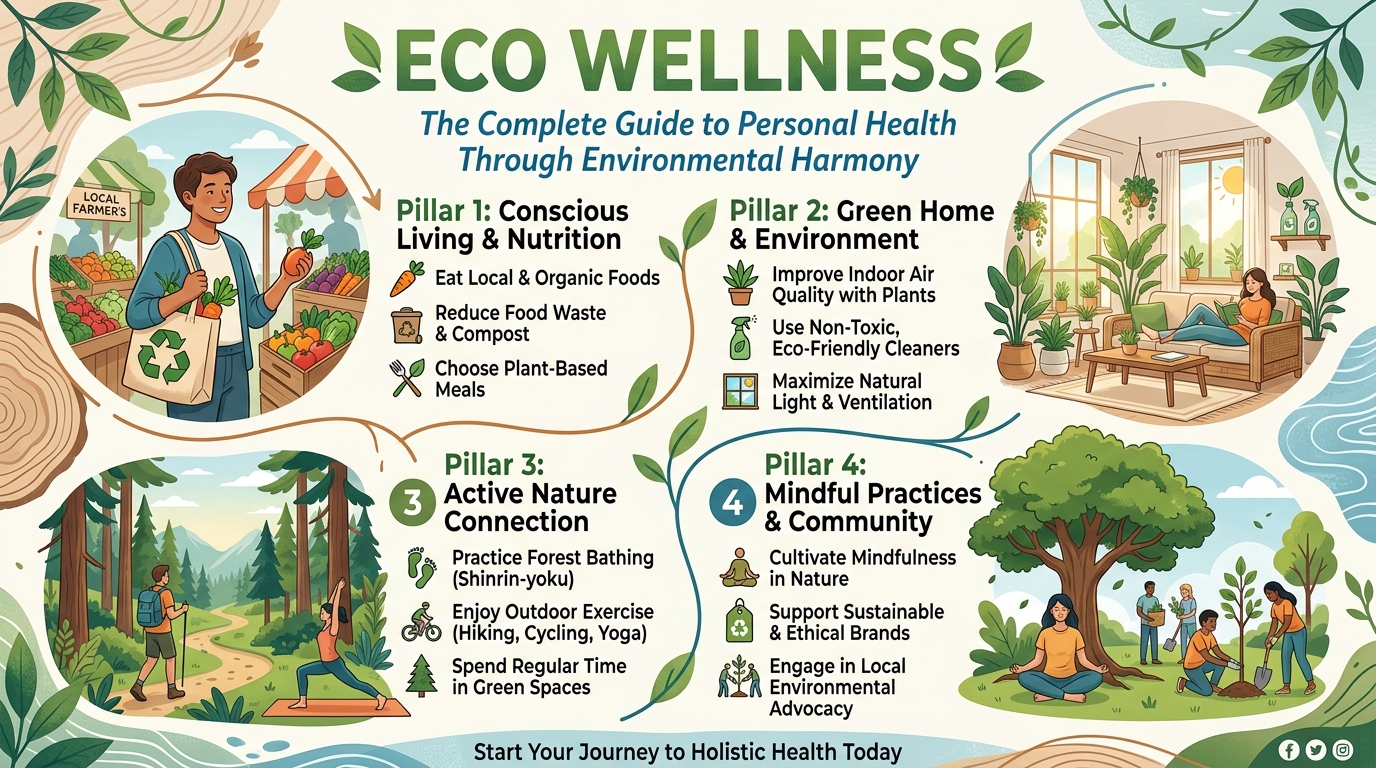
Introduction
Eco wellness is an integrated approach to health that recognizes the profound interconnection between human well-being and the health of the natural environment. Unlike conventional wellness models that focus exclusively on diet, exercise, and stress management, eco wellness expands the frame to include air quality, water purity, exposure to nature, sustainable consumption, and the ecological footprint of daily choices. The core principle is simple: a healthy planet produces healthy people, and individuals who live in harmony with their environment experience better physical, mental, and emotional outcomes. As climate change, pollution, and biodiversity loss increasingly affect human health, eco wellness has shifted from an alternative philosophy to an evidence-based necessity. This comprehensive guide explores the science, practices, and benefits of eco wellness, providing actionable strategies for aligning personal health with planetary health.
What Is Eco Wellness?
Eco wellness is the practice of pursuing personal health through behaviors that simultaneously support environmental sustainability. It is based on the understanding that human bodies are inseparable from the ecosystems in which they live. The air you breathe, the water you drink, the food you eat, and the products you use all originate from and return to the natural world. When ecosystems are polluted, degraded, or destabilized, human health suffers directly and indirectly. Conversely, when you adopt practices that reduce your environmental impact—eating plant-based foods, walking instead of driving, reducing plastic use, spending time in nature—you improve your own health while contributing to ecological regeneration. Eco wellness is not about sacrifice or deprivation. It is about recognizing that the choices benefiting the planet also benefit your body, mind, and spirit.
The Science of Eco Wellness: How Environment Affects Health
| Environmental Factor | Health Impact | Mechanism |
|---|---|---|
| Air pollution (PM2.5) | Respiratory disease, cardiovascular events, cognitive decline | Systemic inflammation, oxidative stress |
| Water contaminants (heavy metals, pesticides, pharmaceuticals) | Cancer, endocrine disruption, developmental disorders | Cellular damage, hormone interference |
| Noise pollution | Hearing loss, hypertension, sleep disturbance, anxiety | Chronic stress activation, sympathetic nervous system overactivity |
| Light pollution (blue light at night) | Insomnia, metabolic disorders, depression | Circadian rhythm disruption, melatonin suppression |
| Chemical exposure (phthalates, BPA, PFAS) | Infertility, obesity, thyroid dysfunction, immune suppression | Endocrine disruption, epigenetic changes |
| Nature deficit (lack of green space) | Depression, anxiety, poor immune function, myopia in children | Reduced physical activity, loss of microbiome diversity, stress |
The World Health Organization estimates that environmental factors contribute to approximately 24 percent of the global burden of disease, including 23 percent of all deaths worldwide. Air pollution alone causes an estimated 7 million premature deaths annually. These statistics make clear that individual health cannot be fully addressed without addressing environmental health.

The Five Pillars of Eco Wellness
Pillar 1: Nature Connection
Direct contact with natural environments produces measurable improvements in human health. The evidence supporting nature connection as a health intervention is substantial.
| Practice | Health Benefit | Recommended Dose |
|---|---|---|
| Forest bathing (Shinrin-yoku) | Reduced cortisol, improved immune function (increased NK cells), lower blood pressure | 2 hours weekly |
| Gardening | Physical activity, stress reduction, improved nutrition, microbiome exposure | 30 minutes 3-4 times weekly |
| Walking in green space | Reduced depression and anxiety, improved attention, lower inflammation | 20-30 minutes daily |
| Watching nature views or videos | Reduced pain perception, faster post-surgical recovery, improved mood | 10-20 minutes as needed |
| Earthing (barefoot contact with ground) | Reduced inflammation, improved sleep, lower pain | 20-30 minutes daily |
The landmark UK study published in Scientific Reports found that people who spent at least 120 minutes per week in nature reported significantly better health and well-being than those with no nature contact. Benefits plateaued after 200-300 minutes, indicating a clear dose-response relationship. Notably, the 120-minute threshold applied regardless of how the time was achieved (single long visit or multiple shorter visits) and regardless of age, gender, income, or existing health conditions.
Pillar 2: Sustainable Nutrition
The food system is a major driver of environmental degradation, accounting for approximately 25-30 percent of global greenhouse gas emissions, 70 percent of freshwater use, and 60 percent of biodiversity loss. Simultaneously, dietary choices are the single most powerful lifestyle factor for personal health.
| Dietary Pattern | Environmental Impact | Personal Health Impact |
|---|---|---|
| Plant-based (vegan/vegetarian) | Lowest carbon, water, land use | Lowest rates of heart disease, diabetes, cancer |
| Mediterranean (low meat, fish, plants) | Moderate environmental impact | Very strong health outcomes |
| Standard Western (high meat, processed foods) | Highest environmental impact | Highest chronic disease rates |
| Local seasonal eating | Reduced transport and storage emissions | Higher nutrient density, lower pesticide exposure |
Actionable shifts for eco wellness nutrition:
| Change | Environmental Benefit | Personal Health Benefit |
|---|---|---|
| Replace beef with beans one meal weekly | 100+ kg CO2 saved annually | 7+ grams fiber, reduced saturated fat |
| Eliminate food waste (40% of food is wasted) | 8% of global emissions preventable | Lower grocery bills, more nutrients consumed |
| Choose organic when feasible | Reduced pesticide and synthetic fertilizer pollution | Lower pesticide exposure |
| Drink tap water (filtered if needed) | Eliminates plastic bottle waste | Saves money, avoids microplastics from bottles |
| Cook at home | Reduces packaging and takeout container waste | Better control over ingredients, portion sizes |
Pillar 3: Non-Toxic Living
Modern homes contain hundreds of synthetic chemicals, many of which have known or suspected health effects. Eco wellness emphasizes reducing exposure to environmental toxins.
| Source | Common Toxins | Health Concerns | Eco Wellness Solution |
|---|---|---|---|
| Cleaning products | Phthalates, ammonia, chlorine | Respiratory irritation, endocrine disruption | Vinegar, baking soda, castile soap |
| Personal care products | Parabens, phthalates, synthetic fragrances | Endocrine disruption, allergies | Minimal ingredients, unscented or essential oil scented |
| Cookware | PFAS (non-stick coatings), aluminum, lead | Hormone disruption, neurotoxicity | Cast iron, stainless steel, glass, ceramic |
| Plastic containers | BPA, phthalates, microplastics | Endocrine disruption, infertility | Glass, stainless steel, silicone |
| Furniture and carpets | Flame retardants, formaldehyde | Neurodevelopmental effects, cancer | Natural materials (wood, cotton, wool) |
| Air fresheners | Phthalates, synthetic musks | Respiratory irritation, hormone disruption | Open windows, houseplants, essential oil diffusers |
The precautionary principle guides eco wellness: when evidence suggests potential harm, reduce exposure even before scientific certainty is achieved.
Pillar 4: Active and Sustainable Transportation
Transportation accounts for approximately 15-20 percent of global carbon emissions. Shifting from private vehicle use to active and public transit produces immediate benefits for both personal health and the environment.
| Mode | Environmental Impact | Personal Health Impact | Time Cost |
|---|---|---|---|
| Walking | Zero emissions | Excellent (cardiovascular, bone density, mood) | 15-20 min per mile |
| Biking | Zero emissions | Excellent (fitness, joint-friendly) | 5-10 min per mile |
| Public transit | Low emissions per passenger | Moderate (walking to/from stops) | Varies |
| Electric vehicle | Low operational emissions | Minimal (sedentary) | Same as conventional car |
| Gas vehicle | High emissions | Sedentary, air pollution exposure | Baseline |
Driving less is one of the most impactful eco wellness behaviors. A study in Nature Climate Change found that shifting from car to bike for just one trip per day reduces an individual’s carbon footprint from transportation by approximately 67 percent while providing significant cardiovascular benefits.
Pillar 5: Mindful Consumption and Waste Reduction
The extraction, manufacturing, distribution, and disposal of consumer goods drive approximately 60 percent of global greenhouse gas emissions and 80 percent of biodiversity loss. Eco wellness emphasizes consuming less, choosing better, and wasting nothing.
| Principle | Action | Environmental Benefit | Personal Benefit |
|---|---|---|---|
| Refuse | Decline freebies, single-use items, junk mail | Reduces demand for disposable goods | Less clutter, less decision fatigue |
| Reduce | Buy only what you need | Lower resource extraction | Financial savings, more space |
| Reuse | Choose reusable over disposable (bags, bottles, containers) | Eliminates single-use waste | Convenience (always have what you need) |
| Repair | Fix broken items instead of replacing | Extends product life | Skill building, satisfaction |
| Compost | Divert food scraps from landfill | Reduces methane emissions | Free soil for plants |
| Recycle | As last resort only | Reduces virgin material demand | Requires minimal effort |
Health Benefits of Eco Wellness Practices
| Eco Wellness Practice | Documented Health Outcome |
|---|---|
| Daily walking or biking | 20-30% reduction in all-cause mortality |
| Plant-rich diet | 30-50% reduction in heart disease, diabetes, colon cancer |
| Time in nature (2 hours weekly) | 25% reduction in depression and anxiety scores |
| Reduced plastic use | Measurable decrease in urinary BPA and phthalate levels |
| Home ventilation and houseplants | 30-50% reduction in indoor air pollutants |
| Gardening | 40% reduction in obesity risk; improved mental health |
| Cold water laundry washing | Reduced microplastic release; preserved clothing quality |
| Line drying clothes | Physical activity; reduced energy use; longer garment life |
Eco Wellness vs. Conventional Wellness
| Aspect | Conventional Wellness | Eco Wellness |
|---|---|---|
| Focus | Individual body only | Individual + environment |
| Diet emphasis | Nutrient composition | Nutrient composition + sustainability + packaging |
| Exercise emphasis | Calories burned, fitness metrics | Active transportation + nature exposure + fitness |
| Home environment | Treated as background | Actively managed for air, water, light, and chemical quality |
| Consumption | Purchasing power for health products | Reducing consumption + choosing sustainably |
| Measure of success | Personal biomarkers (weight, blood pressure) | Personal biomarkers + ecological footprint |
| Time horizon | Lifespan | Lifespan + future generations |
How to Start Your Eco Wellness Journey
| Phase | Timeframe | Actions |
|---|---|---|
| Week 1-2 | Assessment and awareness | Track: transportation miles, meat meals, plastic waste, nature time, home toxins |
| Month 1 | Low-effort swaps | Reusable bags, water bottle, coffee cup; open windows daily; 15-minute nature walk |
| Month 2 | Dietary shifts | Meatless days; reduce packaged foods; shop at farmers market |
| Month 3 | Home improvements | Natural cleaning products; remove shoes indoors; add houseplants |
| Month 4-6 | Transportation changes | Bike or walk one weekly errand; try public transit; combine car trips |
| Month 6-12 | Deeper integration | Compost setup; energy efficiency upgrades; second-hand shopping habit; community garden |
Common Obstacles and Solutions
| Obstacle | Eco Wellness Solution |
|---|---|
| Living in a food desert | Frozen and canned produce (minimal nutrient loss, long shelf life); container gardening (window herbs, tomatoes) |
| No nearby green space | Indoor plants, nature videos or sounds, weekend trips to regional parks, balcony or rooftop gardening |
| Car-dependent location | Trip chaining; carpooling; advocacy for transit and bike infrastructure; remote work |
| Renting (cannot modify home) | Portable air filter, window insulation kit, low-flow showerhead, houseplants |
| Limited budget | Many eco wellness practices save money (walking, line drying, less meat, reusable items) |
| Disability or mobility limitations | Adapted gardening (raised beds, container), nature viewing from window, virtual nature experiences, seated movement |
Eco Wellness for Communities and Workplaces
Individual actions matter, but collective efforts multiply impact. Eco wellness extends to:
| Setting | Actions |
|---|---|
| Home | Shared meal planning, family nature time, recycling and compost systems |
| Workplace | Bike parking, remote work policy, reusable dishware, office plants, walking meetings |
| School | Outdoor education, school gardens, active transportation to school (walking school bus) |
| Neighborhood | Community gardens, tool libraries, repair cafes, car-free days, native plant landscaping |
Frequently Asked Questions (FAQs)
Q1: Is eco wellness expensive to practice?
A1: No. Most eco wellness practices save money. Walking instead of driving costs nothing and saves fuel. Reducing meat and packaged foods lowers grocery bills. Natural cleaning products (vinegar, baking soda) cost pennies per use. Reusable items eliminate ongoing purchases of disposables. Some upfront investments (solar panels, efficient appliances) pay back over time.
Q2: Can one person practicing eco wellness really make a difference?
A2: Yes through three pathways. Direct impact: your personal carbon and toxin footprint is reduced. Social influence: friends, family, and neighbors observe and adopt practices. Collective action: individuals who practice eco wellness are more likely to vote for environmental policies and advocate for systemic change. If every American replaced one car trip per week with biking or walking, annual emissions would fall by over 25 million tons of CO2.
Q3: What is the single most impactful eco wellness change?
A3: For most people in developed countries, reducing air travel and personal vehicle use produces the largest environmental benefit. For those who do not travel frequently, shifting to a plant-rich diet (especially reducing beef and lamb) is most impactful. For personal health, achieving 120 minutes of nature contact weekly and increasing daily steps to 7,000-10,000 produce the largest gains.
Q4: How do I know if my cleaning or personal care products are toxic?
A4: Read ingredient labels. Avoid products listing “fragrance” or “parfum” (can hide phthalates), parabens, phthalates, triclosan, sodium lauryl sulfate, and quaternary ammonium compounds. Look for products with short ingredient lists of recognizable substances. The Environmental Working Group (EWG) maintains Skin Deep and Healthy Living databases rating thousands of products.
Q5: Is tap water safe to drink for eco wellness?
A5: In most developed countries, tap water is more strictly regulated than bottled water. However, contaminants vary by location. Check your local water quality report. For peace of mind, a faucet-mounted or pitcher carbon filter (e.g., Brita, Pur) reduces chlorine, lead, and some emerging contaminants. Avoid bottled water due to plastic waste and potential microplastic contamination.
Q6: How does eco wellness address climate anxiety?
A6: Taking action is one of the most effective remedies for eco-anxiety. Practicing eco wellness provides a sense of agency and purpose. Additionally, nature connection practices (forest bathing, gardening, outdoor walks) directly reduce anxiety and depression symptoms. Eco wellness communities provide social support for shared concerns.
Q7: Can I practice eco wellness in a small apartment with no outdoor space?
A7: Yes. Indoor plants improve air quality. A balcony or windowsill can hold herb pots. Vermicomposting (worm bin) processes food scraps indoors. Join a community garden for outdoor space. Focus on transportation, diet, toxin reduction, and consumption habits, which are independent of apartment size.
Q8: Is organic food necessary for eco wellness?
A8: No, but it is beneficial for reducing pesticide exposure and supporting sustainable farming. If budget is limited, prioritize organic for the Dirty Dozen (strawberries, spinach, kale, nectarines, apples, grapes, peaches, cherries, pears, tomatoes, celery, potatoes). Conventional produce is far better than no produce. Buying local and seasonal often matters more than organic for environmental impact.
Q9: How do I handle family members who do not share eco wellness values?
A9: Lead by example without lecturing. Make eco wellness practices convenient and enjoyable. Serve delicious plant-based meals without labeling them. Invite family on nature walks as quality time. Celebrate small wins. Over time, many resistant family members adopt practices they initially rejected. Focus on your own choices first.
Q10: What is the relationship between eco wellness and traditional ecological knowledge?
A10: Indigenous and traditional ecological knowledge systems have practiced eco wellness for millennia, recognizing that human health depends on ecosystem health. Eco wellness respectfully draws from these traditions (forest bathing from Japan, traditional farming practices, natural building) while acknowledging their origins. Supporting indigenous land rights and traditional environmental stewardship is an eco wellness action.
Conclusion
Eco wellness reframes health not as an individual pursuit isolated from the world but as a relationship with the living planet. The evidence is clear: the same behaviors that reduce your environmental footprint—eating plants, walking and biking, reducing waste, avoiding toxins, spending time in nature—directly improve your physical health, mental clarity, emotional balance, and longevity. There is no trade-off. No sacrifice. No expensive equipment required. The choice to walk instead of drive lowers your emissions and strengthens your heart. The choice to eat beans instead of beef reduces agricultural pollution and improves your cholesterol. The choice to spend two hours in a forest each week lowers your cortisol and boosts your immune system. Eco wellness is not a trend or a luxury. It is the simple recognition that you are nature—and when you care for nature, you care for yourself. Start where you are. Walk one trip. Eat one plant-based meal. Turn off one light. Step outside. Your health and the planet’s health rise together.