Introduction
Healthy habits are routine behaviors performed automatically that contribute positively to physical health, mental well-being, and overall quality of life. Unlike willpower-dependent actions that require constant conscious effort, habits operate through automatic cognitive processes that make healthy choices feel natural and effortless over time. The science of habit formation reveals that approximately 40-45 percent of daily behaviors are repeated in the same context each day, meaning nearly half of your life operates on autopilot. By intentionally shaping these automatic patterns, you can transform your health without relying on motivation or discipline alone. This comprehensive guide provides evidence-based strategies for understanding, building, and maintaining healthy habits across all dimensions of wellness.
What Are Healthy Habits?
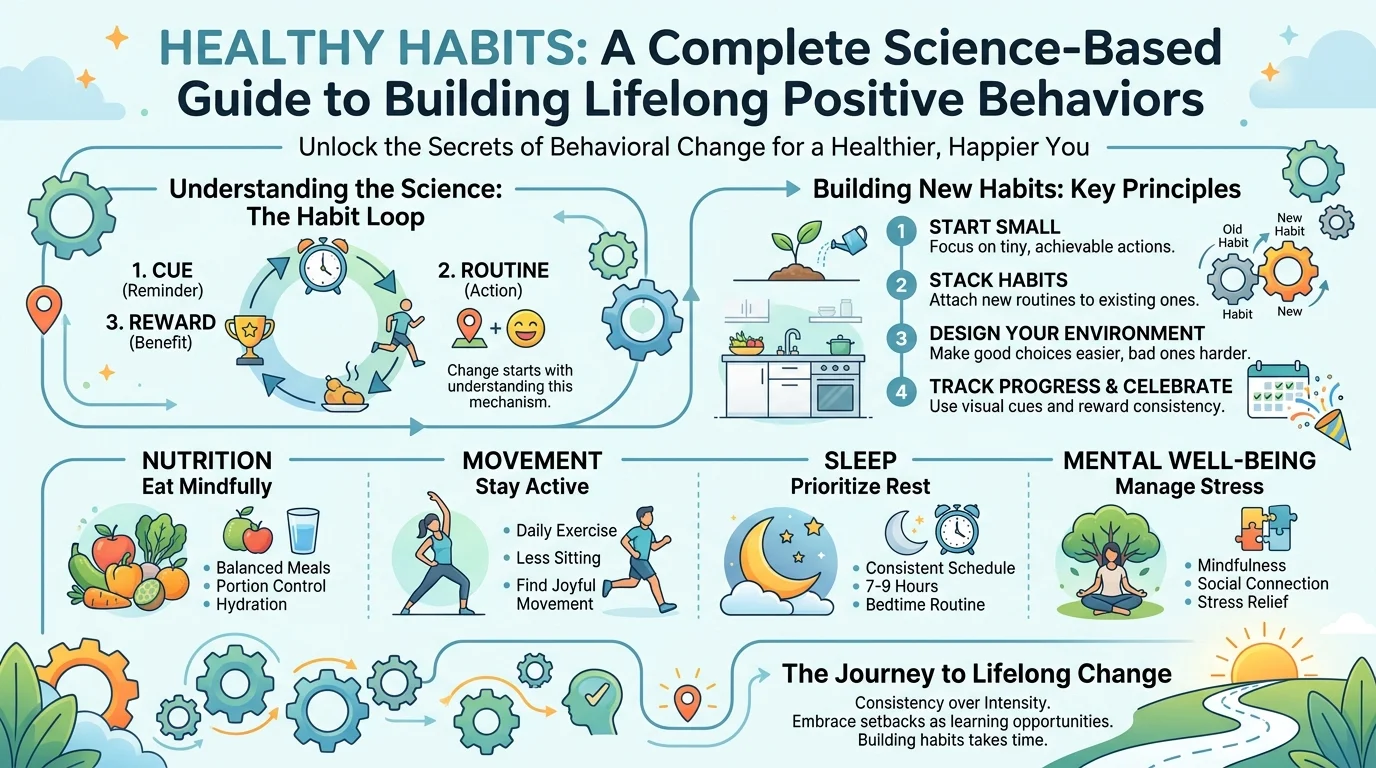
Healthy habits are learned behavioral patterns that become automatic through repetition in consistent contexts. They operate through a neurological loop called the habit cycle: cue, routine, reward. A cue triggers the brain to initiate a behavior, the routine is the behavior itself, and the reward provides positive reinforcement that strengthens the neural pathway for future repetition. Over time, the brain encodes this loop so efficiently that the behavior occurs with minimal conscious effort or decision-making. Healthy habits include practices like brushing teeth without thinking, automatically reaching for water instead of soda, or putting on walking shoes after dinner without internal negotiation.
The Science of Habit Formation
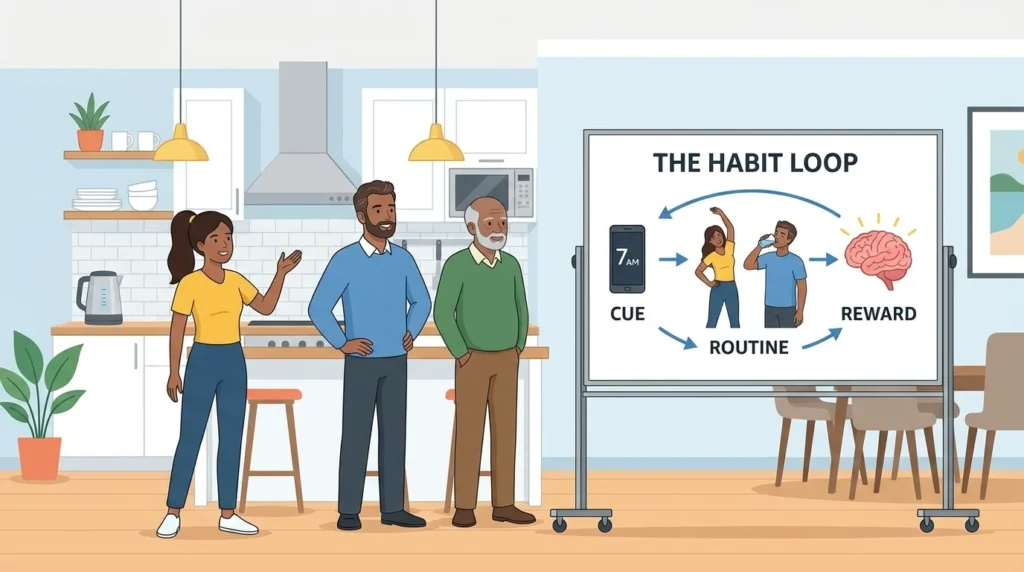
The Habit Loop
| Component | Description | Example |
|---|---|---|
| Cue (Trigger) | Signal that initiates the habit | Time of day, location, emotional state, preceding action |
| Routine (Behavior) | The action you take | Going for a walk, drinking water, meditating |
| Reward (Reinforcement) | Positive outcome that reinforces the loop | Feeling energized, reduced stress, sense of accomplishment |
How Long Does Habit Formation Take?
| Study | Average Time to Automate | Range |
|---|---|---|
| University College London (2009) | 66 days | 18 to 254 days |
| Habit formation research synthesis | 2-8 months | Varies by complexity |
| Simple habits (drinking water) | 18-30 days | – |
| Exercise habits | 6-12 weeks | – |
| Dietary habit changes | 4-8 months | – |
Key insight: Missing one day does not significantly delay habit formation, but missing multiple consecutive days requires restarting the process. Consistency frequency matters more than perfection.
Core Healthy Habits Across Wellness Dimensions
Physical Health Habits
| Habit | Why It Matters | How to Build |
|---|---|---|
| 7-9 hours sleep nightly | Immune function, memory consolidation, metabolic health | Set consistent bedtime; no screens 60 minutes before |
| 8-10 glasses water daily | Hydration for all bodily systems | Keep water bottle visible; drink before each meal |
| Daily walking (7,000-10,000 steps) | Cardiovascular health, weight management, mood | Park farther away; take stairs; walk during phone calls |
| Strength training 2-3 times weekly | Muscle mass, bone density, metabolic rate | Schedule sessions; pair with existing habits |
| Whole food, plant-rich meals | Nutrient density, disease prevention | Shop perimeter of grocery store; cook at home |
| Hand washing (20 seconds) | Infection prevention | After bathroom, before eating, after touching public surfaces |
| Dental hygiene (brush, floss) | Oral and cardiovascular health | Keep floss visible; pair with brushing |
Mental and Emotional Health Habits
| Habit | Why It Matters | How to Build |
|---|---|---|
| Morning sunlight exposure (10-30 minutes) | Circadian rhythm regulation, vitamin D, mood | Coffee or breakfast near window; short outdoor walk |
| Breathwork or meditation (5-10 minutes) | Stress reduction, focus improvement | After waking or before bed; use app for guidance |
| Gratitude journaling | Increased positive emotion, better sleep | Write 3 things daily; keep journal on nightstand |
| Digital sunset (no screens 60 min before bed) | Sleep quality, reduced anxiety | Charge phone outside bedroom; use real alarm clock |
| Social connection (daily meaningful contact) | Reduced depression risk, longer lifespan | Schedule calls; join groups; eat meals with others |
| Learning something new | Cognitive reserve, neuroplasticity | 10 minutes daily on new skill or topic |
Environmental and Preventive Habits
| Habit | Why It Matters | How to Build |
|---|---|---|
| Wearing sunscreen (SPF 30+) | Skin cancer prevention, anti-aging | Keep by toothbrush; apply every morning |
| Regular medical and dental checkups | Early detection of conditions | Schedule annual appointments on birthday |
| Stretching or mobility work | Injury prevention, flexibility | During TV commercials; before and after exercise |
| Decluttering 5-10 minutes daily | Reduced anxiety, improved focus | Timer method; one drawer or surface at a time |
| Reviewing finances weekly | Reduced money stress, better saving | Same day and time each week |
The Habit Formation Process Step by Step
Step 1: Identify Your Starting Point
Before adding new habits, understand your current automatic patterns. Track for one week without judgment:
| Behavior to Track | Method | What to Note |
|---|---|---|
| Sleep and wake times | Bedside log or wearable | Consistency, duration, quality |
| Meals and snacks | Food journal (not calorie counting) | What, when, where, with whom |
| Movement | Step counter or activity log | Type, duration, frequency |
| Screen time | Phone screen time report | Total hours, specific apps, times of day |
| Stress and mood | 1-10 scale with brief note | Triggers, patterns, coping methods |
Step 2: Choose One Keystone Habit
A keystone habit is a behavior that naturally triggers other positive changes. Starting with a keystone habit creates a cascade of improvements.
| Keystone Habit | Triggered Positive Changes |
|---|---|
| Consistent sleep schedule | Better food choices, more energy, improved mood |
| Daily walking | Increased motivation for other exercise, time outdoors |
| Meal prepping on Sundays | Healthier weekday eating, reduced takeout spending |
| Morning meditation | Reduced reactivity, clearer priorities all day |
| Making the bed | Sense of accomplishment, tidier room, organized mindset |
Step 3: Use Habit Stacking
Habit stacking means attaching a new habit to an existing automatic behavior. Formula: After [existing habit], I will [new habit].
| Existing Habit | New Stacked Habit |
|---|---|
| After waking up | I will drink one glass of water |
| After brushing teeth | I will floss |
| After pouring morning coffee | I will write one gratitude item |
| After using the bathroom | I will do 10 squats |
| After finishing work | I will change into exercise clothes |
| After sitting down for dinner | I will place vegetables on plate first |
| After plugging in phone at night | I will set out tomorrow’s clothes |
Step 4: Design Your Environment
Environment design makes desired habits easier and undesired habits harder. This is more effective than willpower.
| Goal | Environment Change |
|---|---|
| Eat more fruit | Place fruit bowl in visible center of kitchen counter |
| Drink less soda | Keep soda in opaque container in back of fridge or eliminate purchase |
| Exercise in morning | Lay out workout clothes and shoes beside bed |
| Read instead of scrolling | Place book on pillow; move phone charger away from bed |
| Take vitamins | Keep bottle next to toothbrush or coffee maker |
| Snack on vegetables | Pre-cut vegetables at eye level in refrigerator |
| Reduce alcohol | Move bottles out of main living area; keep non-alcoholic drinks visible |
Step 5: Start Tiny
The two-minute rule: scale any new habit down to a version that takes less than two minutes to complete. Once started, continuing is easier.
| Desired Habit | Two-Minute Version |
|---|---|
| Exercise for 30 minutes | Put on workout clothes and step outside door |
| Meditate for 20 minutes | Sit on cushion and take three conscious breaths |
| Write journal entries | Write one sentence |
| Read 30 pages | Read one paragraph |
| Prepare healthy meals | Chop one vegetable |
| Clean the house | Wash three dishes or fold three items |
Step 6: Track and Reward
Tracking provides immediate evidence of progress, which serves as its own reward.
| Tracking Method | Best For | Example |
|---|---|---|
| Paper calendar with X marks | Simple yes/no habits | Mark each day you walked |
| Habit tracking app | Multiple habits | Streak tracking, reminders, data visualization |
| Journal entry | Reflective tracking | Noted energy, mood, and difficulty level |
| Accountability partner | Social reinforcement | Daily text photo of completed habit |
Reward yourself for consistency, not just outcomes. After one week of successful habit completion, enjoy a non-food reward like a bath, extra reading time, or movie night.
Breaking Unhealthy Habits
The same habit loop that builds healthy patterns can dismantle unhealthy ones. Identify the cue and reward, then change the routine.
| Unhealthy Habit | Typical Cue | Typical Reward | Alternative Routine |
|---|---|---|---|
| Afternoon snacking | 3 PM energy dip | Temporary energy boost | Take stairs or walk 5 minutes; drink cold water |
| Checking phone | Boredom, notification | Novelty, social connection | Short breathing exercise; doodle or write |
| Late-night eating | Boredom, stress | Comfort, distraction | Herbal tea; 5-minute stretching |
| Nail biting | Anxiety, focus | Sensory stimulation | Stress ball; fidget toy |
| Hitting snooze repeatedly | Alarm sound | Comfort of warm bed | Place alarm across room; prepare morning reward |
Common Habit-Building Mistakes
| Mistake | Why It Fails | Better Approach |
|---|---|---|
| Changing too much at once | Willpower is finite; multiple changes deplete resources | One habit at a time until automatic |
| Setting vague goals | No clear cue or execution plan | Specific: what, when, where, how long |
| Relying on motivation | Motivation fluctuates; habits rely on systems | Design environment; use habit stacking |
| Expecting linear progress | Missed days cause discouragement | Plan for imperfection; never miss twice |
| No reward or tracking | Brain receives no reinforcement signal | Visible tracking; immediate small rewards |
| Punishing failure | Shame undermines motivation | Self-compassion; analyze what went wrong |
Habits by Time of Day: A Sample Framework
| Time | Habit Cluster | Sample Habits |
|---|---|---|
| Morning (first 30 minutes) | Anchor habits | Drink water, sunlight exposure, make bed, stretch, gratitude statement |
| Mid-morning | Energy maintenance | Stand and move 2 minutes per hour, refill water, piece of fruit |
| Lunch | Recharge | Walk 10 minutes after eating, breathwork 2 minutes, connect with person |
| Afternoon | Focus protection | 2-minute stretch every hour, afternoon sunlight break, postpone phone until breaks |
| Evening (last 60 minutes) | Wind-down | No screens, light cleaning or preparation for tomorrow, herbal tea, reading physical book |
| Bedtime | Sleep preparation | Consistent time, cool dark room, same wind-down sequence nightly |
Measuring Habit Success
| Metric | Definition | Healthy Target |
|---|---|---|
| Consistency rate | Percentage of days habit performed | 80% or higher (missing 1-2 days per week acceptable) |
| Automaticity score | How automatic the habit feels (1-10) | 7 or above after 2-3 months |
| Cue response time | Seconds between cue and action | Under 5 seconds (no hesitation) |
| Identity integration | “I am someone who [does this habit]” | Strong agreement after 3-6 months |
Frequently Asked Questions (FAQs)
Q1: How many habits should I build at once?
A1: No more than one to three. Start with one keystone habit. Add a second after 3-4 weeks when the first feels relatively automatic. Adding multiple habits simultaneously overwhelms willpower and reduces success rates significantly.
Q2: What if I miss a day?
A2: Missing one day does not break habit formation. Resume the next day without self-criticism. The danger is missing two days consecutively, which often leads to complete abandonment. Never miss twice in a row.
Q3: Why do some habits feel easy to build while others feel impossible?
A3: Habit difficulty varies by several factors: enjoyment of the behavior, how visible the cue is, how immediate the reward is, and how compatible the habit is with existing routines. Exercise and dietary changes are typically harder than hydration or hygiene habits because rewards are delayed.
Q4: Can I break a bad habit without replacing it?
A4: Possibly, but difficult. The habit loop’s reward still needs to be satisfied. Identifying what reward the bad habit provides and finding a healthier behavior that delivers the same reward is more effective than simply trying to stop.
Q5: How do I maintain habits during travel, holidays, or illness?
A5: Scale down. The two-minute version of a habit is better than nothing. Walk for 5 minutes instead of 30. Write one sentence instead of a full journal. The goal during disruptions is maintenance, not progress. Resume full habit immediately after disruption ends.
Q6: Is it better to build habits at the same time every day?
A6: Yes. Consistency of cue (same time, same place, same preceding action) strengthens habit formation significantly. However, some habits like drinking water or taking movement breaks may need multiple flexible cues throughout the day.
Q7: How do I help my child build healthy habits?
A7: Children respond to the same habit loop but need more immediate rewards, parental modeling of the behavior, and consistent routines. Do not rely on explanation or willpower. Use visual charts, small tangible rewards, and family participation.
Q8: What role does self-compassion play in habit formation?
A8: A large role. People who respond to setbacks with self-compassion resume habits more quickly than those who respond with self-criticism. Guilt and shame are demotivating. Treat yourself as you would treat a friend who missed a day.
Q9: Are some people naturally better at habit formation?
A9: Genetic factors and personality traits influence baseline automaticity and consistency. However, habit formation is a skill that improves with practice. People who believe they lack willpower can still build effective habits through environment design and habit stacking.
Q10: How do I know when a habit is fully automatic?
A10: A habit is automatic when you perform it without thinking, when you feel discomfort or a sense of something missing if you skip it, and when you can perform it even when tired, stressed, or busy. Most habits reach this level after 2-8 months of consistent practice.
Conclusion
Healthy habits are not about perfection, willpower, or dramatic transformations. They are about small, consistent actions repeated in reliable contexts until they become automatic. The science is clear: environment design outperforms self-discipline. Habit stacking outperforms memory. Tiny habits outperform ambitious resolutions. Start with one behavior. Anchor it to an existing routine. Make the cue visible. Make the action easy. Celebrate the completion. Do it again tomorrow. Over months, these small repetitions compound into profound changes in health, energy, mood, and longevity. You do not need to change everything. You do not need to change quickly. You only need to start and to continue. Your future self will thank you for the habits you build today.