Introduction
A clean lifestyle represents a conscious commitment to reducing exposure to synthetic chemicals, processed foods, and environmental toxins while embracing natural, whole-food nutrition, non-toxic personal care, and mindful living practices. Unlike restrictive diets or extreme detox programs, a clean lifestyle is a sustainable, holistic approach that prioritizes simplicity, purity, and wellness across all areas of daily life.
In an age where the average person is exposed to over 80,000 synthetic chemicals through food, water, air, personal care products, and household items, adopting a clean lifestyle has become not just a wellness trend but a health necessity. This comprehensive guide will walk you through every aspect of clean living, providing actionable strategies to transform your environment, diet, and daily habits for optimal health.
Table of Contents
| Section | Topic |
|---|---|
| 1 | What Is a Clean Lifestyle? |
| 2 | The Hidden Toxins in Modern Living |
| 3 | Clean Eating: Whole Foods Nutrition |
| 4 | Non-Toxic Personal Care and Beauty |
| 5 | Clean Home Environment |
| 6 | Clean Water and Air Strategies |
| 7 | Mindful Living and Stress Reduction |
| 8 | Creating Your Clean Lifestyle Action Plan |
| 9 | Frequently Asked Questions (FAQs) |
| 10 | Conclusion |
1. What Is a Clean Lifestyle?
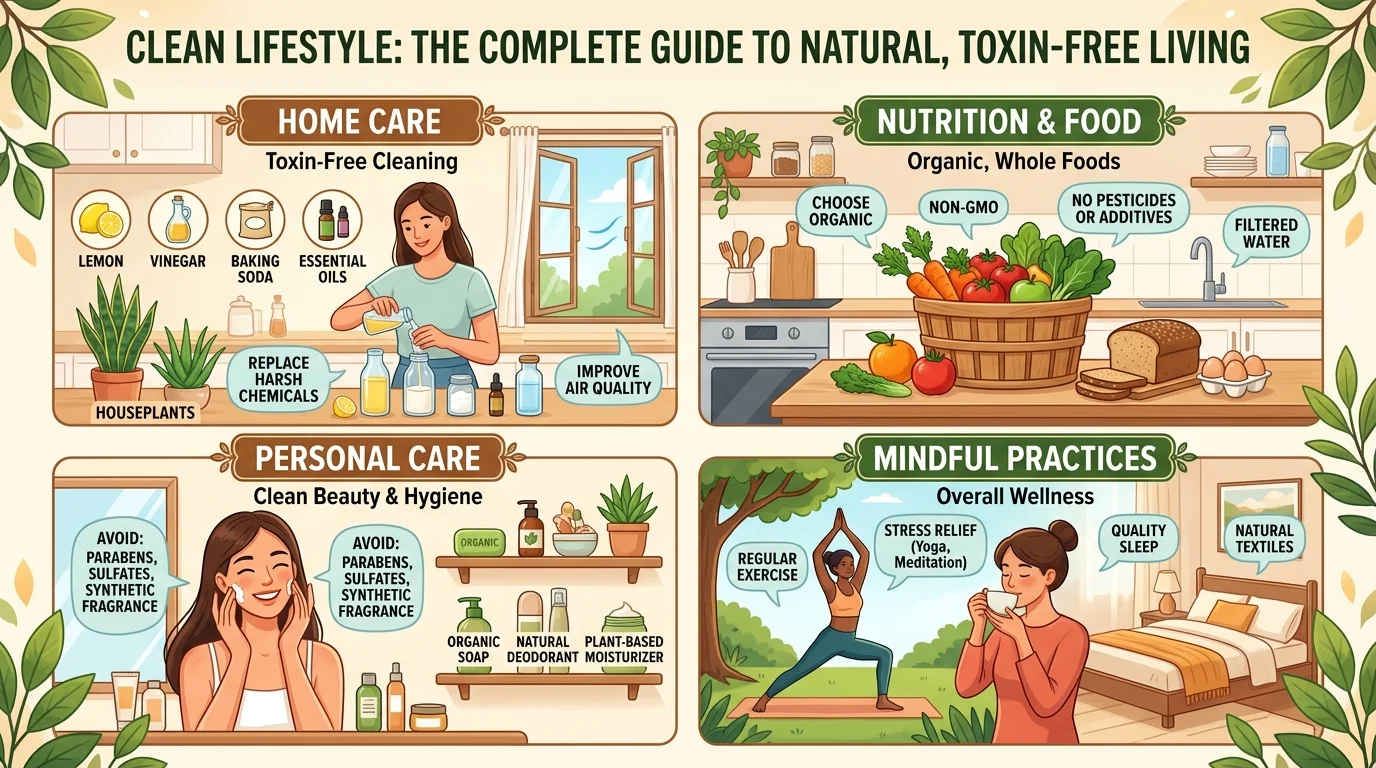
A clean lifestyle is a philosophy and practice of minimizing exposure to artificial, toxic, and unnecessary substances while maximizing intake of natural, nourishing, and beneficial elements. It encompasses five core domains: nutrition, personal care, home environment, mental wellness, and environmental engagement.
The clean lifestyle is not about perfectionism or deprivation. Rather, it is about making informed choices that reduce your toxic burden and support your body’s natural detoxification systems. The guiding principle is simple: if you cannot pronounce an ingredient, recognize it as food, or find it in nature, reconsider whether it belongs in or on your body.
Key pillars of a clean lifestyle include consuming whole, minimally processed foods; avoiding artificial additives, preservatives, and colorings; choosing personal care products without parabens, phthalates, and synthetic fragrances; using natural household cleaners; filtering drinking water; reducing plastic use; and cultivating mental clarity through mindfulness and nature connection.
2. The Hidden Toxins in Modern Living
Understanding what you are avoiding is the first step toward a clean lifestyle. The average adult carries over 700 industrial chemicals in their body, many linked to hormonal disruption, neurological issues, and chronic disease.
In food, common toxins include artificial sweeteners (aspartame, sucralose, saccharin), preservatives (BHA, BHT, sodium benzoate, sodium nitrite), artificial colors (Red 40, Yellow 5, Blue 1), flavor enhancers (monosodium glutamate or MSG), and endocrine disruptors like bisphenols from can linings and thermal paper receipts.
Personal care products contain parabens (methylparaben, propylparaben, butylparaben) used as preservatives but linked to breast cancer and reproductive toxicity. Phthalates, found in synthetic fragrances, nail polish, and hair sprays, disrupt male reproductive development. Sodium lauryl sulfate (SLS) and sodium laureth sulfate (SLES), common in shampoos and body washes, strip natural oils and may form carcinogenic byproducts.
Household cleaning products release volatile organic compounds (VOCs) including formaldehyde, benzene, and chloroform. Quaternary ammonium compounds (“quats”) in fabric softeners and disinfectants contribute to respiratory issues and antimicrobial resistance. Perchloroethylene (PERC) in dry cleaning and spot removers is a neurotoxin and probable carcinogen.
Home environments harbor flame retardants (polybrominated diphenyl ethers or PBDEs) in furniture and electronics, non-stick coatings (perfluorooctanoic acid or PFOA) in cookware, and bisphenol A (BPA) and BPS in plastics and receipts.
3. Clean Eating: Whole Foods Nutrition
Clean eating forms the foundation of a clean lifestyle. This approach prioritizes foods in their most natural state while eliminating or minimizing processed items.
What to Eat Abundantly: Fresh organic vegetables (leafy greens, cruciferous vegetables, root vegetables) provide fiber, vitamins, minerals, and phytonutrients. Fresh fruits (berries, citrus, apples, pears) offer antioxidants and natural sweetness. Pasture-raised meats and poultry, wild-caught fish, organic eggs, legumes and beans, nuts and seeds, whole grains (quinoa, brown rice, oats, buckwheat), herbs and spices, healthy fats (avocado, coconut oil, olive oil, ghee), fermented foods (sauerkraut, kimchi, kombucha, kefir).
What to Eliminate or Reduce: Refined sugar and artificial sweeteners, refined white flour and baked goods, industrial seed oils (canola, soybean, corn, sunflower, safflower), processed meats (deli meats, bacon, sausage, hot dogs), artificial colors and flavors, preservatives and chemical additives, hydrogenated and partially hydrogenated oils, high-fructose corn syrup, MSG and its hidden forms (hydrolyzed protein, autolyzed yeast, calcium caseinate).
Practical Clean Eating Strategies: Read every ingredient label. If you cannot identify or pronounce an ingredient, put the product back. Cook at home using whole ingredients. Batch cook on weekends for busy weekdays. Shop the perimeter of grocery stores where fresh produce, meats, and dairy live. Visit farmers markets for seasonal, local produce. Grow a small vegetable garden or windowsill herbs. Drink primarily water, herbal tea, and occasionally organic coffee. Eliminate sugary drinks, diet sodas, and commercial fruit juices. Soak and rinse beans, grains, and nuts to reduce antinutrients. Choose organic for the “Dirty Dozen” (strawberries, spinach, kale, nectarines, apples, grapes, peaches, cherries, pears, tomatoes, celery, potatoes).
4. Non-Toxic Personal Care and Beauty
Your skin absorbs up to 60% of what you apply to it, directly entering your bloodstream without liver filtration. Transitioning to clean personal care products dramatically reduces your toxic burden.
Clean Swaps for Common Products:
| Conventional Product | Toxic Ingredients | Clean Alternative |
|---|---|---|
| Deodorant | Aluminum, parabens, triclosan | Baking soda and coconut oil paste, magnesium spray, crystal salt deodorant |
| Shampoo | SLS, SLES, parabens, phthalates | Castile soap rinse, baking soda wash, apple cider vinegar conditioner |
| Lotion | Mineral oil, parabens, synthetic fragrance | Shea butter, coconut oil, jojoba oil, homemade balms |
| Toothpaste | Fluoride, triclosan, SLS, artificial sweeteners | Baking soda, coconut oil pulling, charcoal powder, natural toothpaste tablets |
| Makeup | Lead, phthalates, parabens, talc | Mineral makeup brands (clean formulations from RMS Beauty, Ilia, W3LL PEOPLE) |
| Sunscreen | Oxybenzone, octinoxate, homosalate | Zinc oxide or titanium dioxide mineral sunscreens |
| Soap | Triclosan, synthetic fragrances, dyes | Castile soap, natural bar soaps, goats milk soap |
| Nail Polish | Formaldehyde, toluene, dibutyl phthalate | 5-free, 7-free, or 10-free polish formulas |
DIY Personal Care Recipes: For face wash, mix honey with baking soda. For body scrub, combine coconut oil with coffee grounds or sea salt. For hair rinse after shampooing, dilute apple cider vinegar 1:4 with water. For lip balm, melt beeswax with coconut oil and a drop of peppermint essential oil. For body oil, use jojoba oil with lavender essential oil.
Reading Cosmetic Labels: Avoid anything listing “fragrance” or “parfum” (trade secret loophole allowing hundreds of undisclosed chemicals). Look for USDA Organic or COSMOS certification. Seek brands committed to the Environmental Working Group’s Skin Deep database verification.
5. Clean Home Environment
Your home should be a sanctuary from environmental toxins, not a source of them. Conventional cleaning products release VOCs that persist indoors at levels 2-5 times higher than outdoors.
DIY Natural Cleaning Solutions:
All-purpose cleaner: Mix equal parts white vinegar and water in a glass spray bottle. Add 10-20 drops of tea tree, lemon, or lavender essential oil.
Glass cleaner: Combine 2 cups water, 2 tablespoons white vinegar, and 4 drops lemon essential oil.
Scouring powder: Sprinkle baking soda directly on surfaces, scrub with damp cloth.
Disinfectant spray: Mix 2 cups water with 2 tablespoons hydrogen peroxide (store in dark bottle) or use 70% alcohol.
Drain cleaner: Pour 1/2 cup baking soda followed by 1/2 cup vinegar, wait 15 minutes, flush with boiling water.
Air freshener: Simmer cinnamon sticks, citrus peels, and cloves in water on stove. Open windows daily for 10-15 minutes even in winter.
Laundry detergent: Grate 1 bar castile soap, mix with 1 cup washing soda and 1 cup borax, use 2 tablespoons per load. Add 1/2 cup white vinegar to rinse cycle as fabric softener.
Reducing Dust and VOCs: Remove shoes at the door. Vacuum weekly with HEPA filter. Use doormats inside and outside every entrance. Choose solid wood furniture over pressed wood (contains formaldehyde-reducing glues). Avoid vinyl flooring and synthetic carpets. Purchase used furniture that has already off-gassed. Open windows regularly. Use houseplants proven to remove VOCs (spider plant, snake plant, peace lily, English ivy). Avoid air freshener plug-ins, candles, and sprays.
6. Clean Water and Air Strategies
Clean water and air are non-negotiable foundations of a clean lifestyle.
Water Filtration: Tap water commonly contains chlorine, chloramine, fluoride, lead, copper, pesticides, pharmaceutical residues, and microplastics. The Environmental Protection Agency allows over 90 contaminants in public water. Best filtration methods include reverse osmosis (removes nearly everything but wastes water and removes beneficial minerals), activated carbon block (removes chlorine, VOCs, lead, some pharmaceuticals, retains minerals), and solid carbon block (most effective for contaminant reduction while preserving minerals). For showers, install a vitamin C or carbon filter to remove chlorine and chloramine (reduces skin and respiratory absorption of these chemicals). Avoid plastic bottled water (microplastic contamination and BPA/BPS from bottle and cap).
Air Purification: Indoor air is often more polluted than outdoor air. Best strategies include houseplants (Boston fern removes formaldehyde, peace lily removes ammonia and benzene, areca palm is excellent overall purifier), HEPA air purifiers (essential for bedrooms and living areas, sized appropriately for room square footage), opening windows for cross-ventilation daily, maintaining humidity between 30-50% to prevent mold, using beeswax or soy candles instead of paraffin, avoiding synthetic fragrances and aerosols, cleaning HVAC filters monthly, and adding Himalayan salt lamps (minimal actual purification but calming ambiance).
7. Mindful Living and Stress Reduction
A clean lifestyle extends beyond physical toxins to include mental and emotional purity. Chronic stress and digital overload create internal toxicity that undermines physical health.
Digital Cleanse Practices: Designate tech-free zones (bedroom, dining table). Turn off notifications except for calls and messages from priority contacts. Schedule daily “analog hours” without screens. Remove social media apps from your phone home screen. Use grayscale mode to reduce phone appeal. Read physical books. Write with pen on paper. Spend time outdoors without devices.
Nature Connection: Forest bathing (shinrin-yoku) involves slow, sensory immersion in nature, proven to reduce cortisol, lower blood pressure, and boost immune function. Aim for 120 minutes weekly in nature, which can be broken into smaller increments. Walk barefoot on grass, soil, or sand (grounding or earthing) to absorb electrons from the Earth, which reduces inflammation and improves sleep.
Stress Management Tools: Morning sunlight exposure within 30 minutes of waking regulates circadian rhythm. Diaphragmatic breathing (5 seconds inhale, 5 seconds hold, 5 seconds exhale) activates parasympathetic nervous system. Meditation for 10-20 minutes daily reduces amygdala reactivity. Gratitude journaling (writing three things you appreciate each day) improves mood and sleep. Regular physical movement that you enjoy (walking, yoga, dancing, strength training). Prioritize 7-9 hours of sleep in complete darkness.
8. Creating Your Clean Lifestyle Action Plan
Transitioning to a clean lifestyle does not happen overnight. Attempting to change everything simultaneously leads to overwhelm and abandonment. Follow this phased approach.
Month One: Foundation – Switch to glass or stainless steel water bottles. Replace one conventional personal care product (deodorant or toothpaste). Eat one completely clean meal per day. Start reading ingredient labels. Open windows for 10 minutes daily.
Month Two: Kitchen and Food – Replace plastic food storage with glass containers. Eliminate sugary drinks. Transition to clean breakfast (oats with berries, eggs with vegetables). Switch to natural dish soap and laundry detergent. Add one green vegetable to each dinner.
Month Three: Home and Body – Make your first DIY all-purpose cleaner. Replace conventional shampoo and conditioner with clean alternatives. Eliminate one processed snack. Add fermented foods (sauerkraut or kimchi) to your diet. Start a small herb garden.
Month Four: Deep Clean – Replace conventional makeup and lotion. Remove synthetic air fresheners and candles. Switch to natural deodorant. Eliminate all artificial sweeteners. Install shower filter if possible.
Month Five: Expansion – Research and purchase water filter for drinking. Replace non-stick cookware with cast iron, stainless steel, or ceramic. Eliminate processed meats. Add 15 minutes of daily nature time. Try one new whole grain.
Month Six: Maintenance and Refinement – Evaluate progress and adjust. Identify remaining problem areas. Share clean lifestyle practices with family. Set new wellness goals. Celebrate your transformation.
9. Frequently Asked Questions (FAQs)
Q1: Is a clean lifestyle expensive?
A: Not necessarily. While organic products and clean beauty brands can cost more upfront, you save money by cooking at home, making DIY cleaners, reducing packaged foods, and buying in bulk. Many clean lifestyle practices like opening windows, walking barefoot, and drinking tap water through a filter cost little to nothing.
Q2: Do I need to go 100% organic to live cleanly?
A: No. Focus on organic for the Environmental Working Group’s Dirty Dozen (highest pesticide residues). For the Clean Fifteen (lowest pesticide residues like avocado, corn, onions, asparagus), conventional is acceptable. Prioritize organic meat, dairy, and eggs due to hormone and antibiotic accumulation in animal fats.
Q3: How do I handle eating at restaurants or friends’ homes?
A: Practice the 80/20 rule – eat clean 80% of the time and allow flexibility for social situations. When dining out, choose simple dishes (grilled protein, steamed vegetables, salad with oil and vinegar). At friends’ homes, eat what is served graciously but in smaller portions if needed. Bring a clean dish to share.
Q4: How long until I notice benefits from a clean lifestyle?
A: Many people report improved energy, better sleep, clearer skin, reduced bloating, and mental clarity within 2-4 weeks. Deeper changes like weight normalization, reduced inflammation, and improved lab markers typically appear within 3-6 months of consistent practice.
Q5: Can children follow a clean lifestyle?
A: Yes, with modifications. Children have smaller bodies and developing systems, making them more vulnerable to toxins. Focus on whole foods, filtered water, natural cleaners, and non-toxic personal care for children. Avoid extreme restrictions that could lead to nutrient deficiencies. Involve children in cooking and gardening to build healthy habits.
Q6: Is tap water safe to drink after filtration?
A: With proper filtration (solid carbon block or reverse osmosis), tap water becomes safer than most bottled water. Test your water first to identify specific contaminants in your area. Well water requires annual testing for bacteria, nitrates, and heavy metals.
Q7: What about coffee and alcohol on a clean lifestyle?
A: Organic, mold-free coffee in moderation (1-2 cups daily) is acceptable for most people. Avoid sugary coffee drinks. For alcohol, clean options include organic wine (no added sulfites), clear spirits (vodka, gin, tequila) without sugary mixers, and hard kombucha. The cleanest approach is eliminating or strictly limiting alcohol due to its toxic burden on the liver.
Q8: How do I verify if a personal care product is truly clean?
A: Use the Environmental Working Group’s Skin Deep database or Think Dirty app. Look for third-party certifications like EWG Verified, Made Safe, or Leaping Bunny. Avoid greenwashing by checking actual ingredient lists rather than trusting front-label claims like “natural” or “clean” (unregulated terms).
Q9: Can a clean lifestyle replace medical treatment?
A: No. A clean lifestyle complements but does not replace necessary medical care. Always follow your doctor’s advice for diagnosed conditions, medications, and treatments. Inform your healthcare provider about any significant lifestyle changes.
Q10: How do I stay motivated when I slip up?
A: Perfection is impossible. One processed meal or non-toxic product does not undo weeks of clean living. Practice self-compassion, identify what triggered the slip, learn from it, and resume clean practices immediately. Progress over perfection is the sustainable approach.
10. Conclusion
A clean lifestyle represents one of the most powerful investments you can make in your long-term health and vitality. By systematically reducing your exposure to synthetic chemicals, processed foods, and environmental toxins while embracing whole foods, natural products, and mindful practices, you lighten the burden on your body’s detoxification systems and create the conditions for optimal wellness.
The journey to clean living is deeply personal and progressive. Start with one small change today – switching your water bottle, reading a food label, opening your windows, or making a DIY cleaner. Each step reduces your toxic load and moves you closer to a life of greater energy, clarity, and resilience.
Remember that the clean lifestyle is not about fear, restriction, or perfection. It is about empowerment, awareness, and intentionality. You have the power to choose what enters your body, your home, and your mind. Every clean choice is an act of self-respect and a vote for a healthier, more sustainable world.