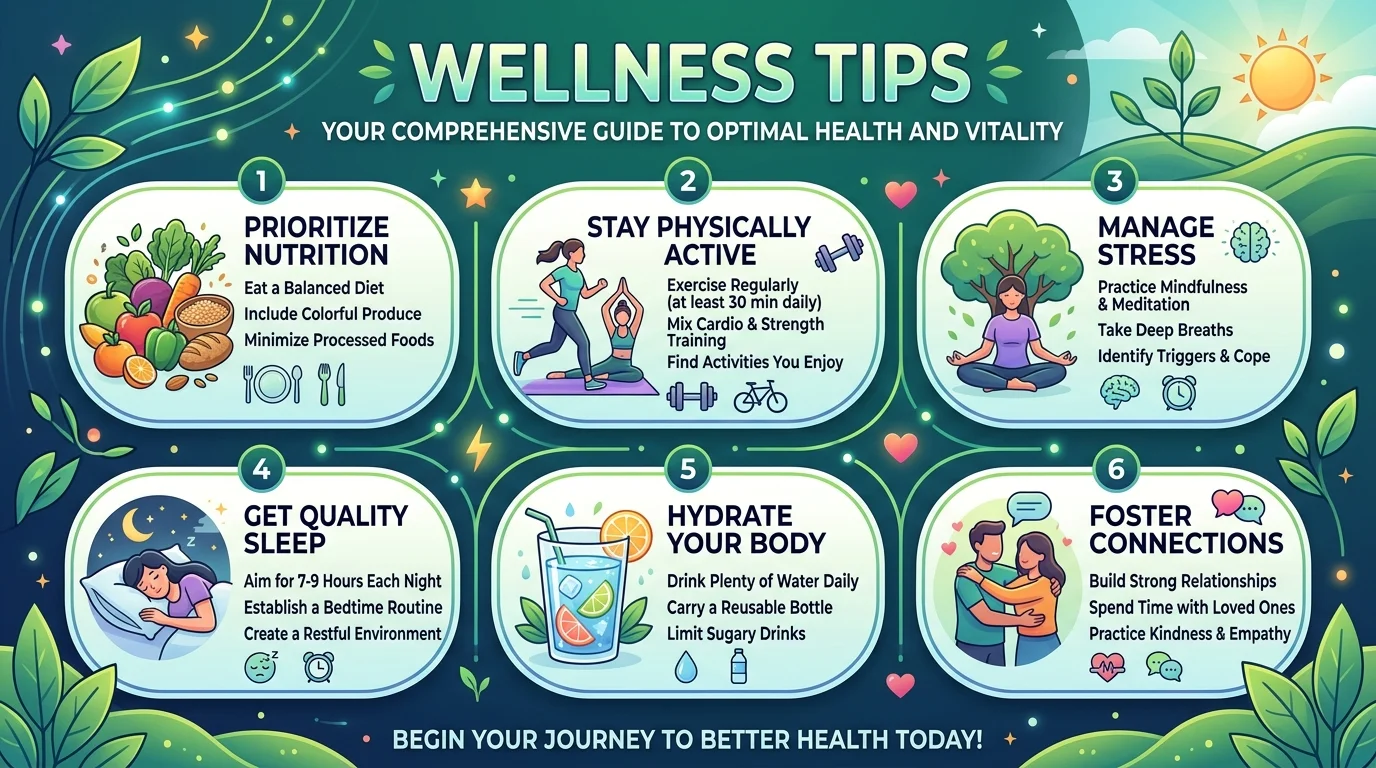
Introduction
Wellness tips are practical, actionable strategies designed to improve physical health, mental clarity, emotional balance, and spiritual fulfillment. Unlike quick-fix solutions or fad diets, genuine wellness tips address the whole person and promote sustainable lifestyle changes that yield lasting benefits. In today’s fast-paced, high-stress world, incorporating effective wellness practices into daily life has become essential for preventing chronic disease, managing stress, and achieving genuine happiness.
This comprehensive guide brings together evidence-based wellness tips across multiple dimensions of health, offering you a complete roadmap to feeling better, functioning optimally, and living more fully. From morning routines to sleep optimization, nutrition strategies to stress management, these wellness tips are designed to be practical, accessible, and immediately implementable.
Table of Contents
| Section | Topic |
|---|---|
| 1 | What Are Wellness Tips and Why They Matter |
| 2 | Morning Wellness Tips for a Powerful Start |
| 3 | Nutrition and Hydration Wellness Tips |
| 4 | Physical Activity and Movement Tips |
| 5 | Mental and Emotional Wellness Tips |
| 6 | Sleep Optimization Tips |
| 7 | Social and Environmental Wellness Tips |
| 8 | Weekly Wellness Tips Action Plan |
| 9 | Frequently Asked Questions (FAQs) |
| 10 | Conclusion |
1. What Are Wellness Tips and Why They Matter
Wellness tips are small, manageable actions that collectively create significant improvements in overall health and quality of life. The concept of wellness extends beyond mere absence of disease to encompass active pursuit of health, happiness, and purpose. The global wellness industry is valued at over 4.5 trillion dollars, yet many people remain confused about which practices truly deliver results.
True wellness rests on six interconnected dimensions: physical wellness (nutrition, exercise, sleep, medical care), emotional wellness (stress management, resilience, self-awareness), intellectual wellness (continuous learning, creativity, critical thinking), social wellness (relationships, community, belonging), spiritual wellness (purpose, values, mindfulness), and environmental wellness (safe spaces, nature connection, sustainable living).
The most effective wellness tips share common characteristics: they are evidence-based rather than trendy, sustainable rather than extreme, personalized rather than one-size-fits-all, proactive rather than reactive, and integrated rather than isolated. The following wellness tips have been selected based on scientific research, expert consensus, and proven real-world results.
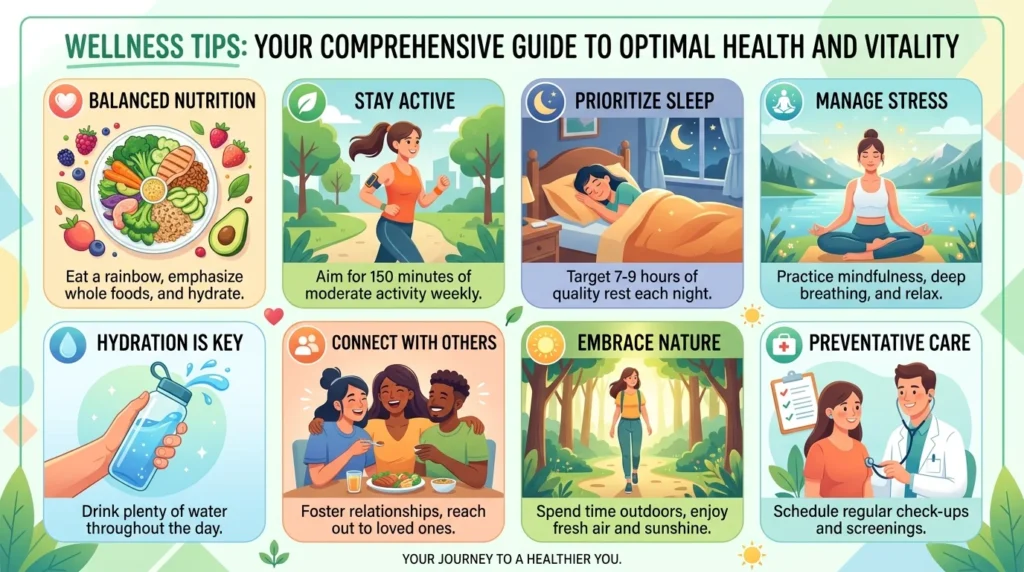
2. Morning Wellness Tips for a Powerful Start
How you begin your day sets the tone for everything that follows. These morning wellness tips optimize your circadian rhythm, energy levels, and mental state.
Wake Up at a Consistent Time – Rising at the same hour daily, including weekends, synchronizes your body’s internal clock. This consistency improves sleep quality, hormone regulation, and daytime alertness. Aim for 7-9 hours of sleep and schedule your wake time accordingly.
Expose Yourself to Morning Light – Within 30 minutes of waking, go outside or sit by a bright window. Morning sunlight suppresses melatonin, increases cortisol (healthy morning spike), and sets your circadian rhythm. Even 5-10 minutes on cloudy days provides benefits. This is one of the most powerful wellness tips for sleep and mood.
Drink Water Immediately – After 6-9 hours without fluid, your body is mildly dehydrated. Drink 16-32 ounces of water before consuming anything else. Add lemon for vitamin C and digestive enzymes. Proper hydration upon waking boosts metabolism, flushes toxins, and relieves morning fatigue.
Delay Caffeine by 60-90 Minutes – Drinking coffee immediately upon waking interferes with adenosine clearance and cortisol’s natural morning peak. Waiting 60-90 minutes allows your body to wake naturally and prevents afternoon energy crashes. If you must have something warm, try hot water with lemon or herbal tea.
Move Your Body Gently – Morning movement does not require intense exercise. Five to ten minutes of stretching, yoga sun salutations, walking, or joint rotations wake up your nervous system, increase blood flow, and reduce morning stiffness. Save high-intensity workouts for later in the day when body temperature peaks.
Practice Mindfulness Before Screens – Check your phone only after completing at least one mindful activity. Breathe deeply for 60 seconds, write in a gratitude journal, meditate for 5 minutes, or simply sit with your thoughts. Starting your day reactive to emails and social media elevates stress hormones before you have any real problems.
Eat Breakfast Within 2 Hours – Breaking your overnight fast provides stable blood sugar and energy. Prioritize protein (eggs, Greek yogurt, protein shake), healthy fats (avocado, nuts, seeds), and fiber (berries, oats, vegetables). Avoid sugary cereals, pastries, and flavored yogurts that cause energy crashes by mid-morning.
3. Nutrition and Hydration Wellness Tips
Proper nutrition and hydration form the biochemical foundation of wellness. These tips help you fuel your body optimally without complicated diets or deprivation.
Prioritize Protein at Every Meal – Protein provides amino acids for tissue repair, enzyme production, immune function, and satiety. Aim for 20-40 grams of protein per meal. Excellent sources include eggs, poultry, fish, lean meat, Greek yogurt, cottage cheese, lentils, chickpeas, tofu, tempeh, and protein powder. Adequate protein intake reduces cravings for processed carbohydrates and supports muscle maintenance during weight loss.
Eat 5-9 Servings of Colorful Vegetables Daily – Different colored vegetables provide different phytonutrients. Green vegetables (spinach, broccoli, kale) offer chlorophyll, magnesium, and vitamin K. Red vegetables (tomatoes, red peppers) provide lycopene and anthocyanins. Orange and yellow vegetables (carrots, squash, sweet potatoes) deliver beta-carotene. Cruciferous vegetables (cabbage, cauliflower, Brussels sprouts) contain sulforaphane, a powerful detoxification compound.
Include Fermented Foods for Gut Health – Your gut microbiome influences digestion, immunity, mood, and even weight. Fermented foods provide beneficial bacteria that support microbial diversity. Add sauerkraut, kimchi, plain unsweetened kefir, plain yogurt, kombucha (low sugar), miso, or tempeh to your daily diet. Start with small amounts to allow your digestive system to adjust.
Hydrate Strategically Throughout the Day – Calculate your baseline water needs: body weight in pounds divided by two equals ounces of water per day. Increase this by 12-16 ounces for every 30 minutes of exercise. Drink water consistently rather than large volumes at once. Signs of adequate hydration include pale yellow urine, infrequent thirst, and regular urination every 2-4 hours.
Time Your Carbohydrates Based on Activity – Carbohydrates are not inherently bad, but timing matters. On high-activity days, eat carbohydrates around your workouts for energy and recovery. On low-activity days, prioritize vegetables and reduce grains, fruits, and starchy vegetables. This approach maintains insulin sensitivity and prevents fat storage.
Practice Mindful Eating – Slow down during meals. Chew each bite thoroughly. Put down your utensil between bites. Eat without screens or reading material. Mindful eating improves digestion, increases satisfaction with smaller portions, and helps you recognize genuine hunger and fullness cues. This simple wellness tip reduces overeating without willpower.
Plan and Prepare Meals Ahead – Set aside 1-2 hours weekly for meal preparation. Wash and chop vegetables, cook grains, hard-boil eggs, portion snacks, and prepare dressings. Having healthy options readily available eliminates the decision fatigue that leads to convenient, processed food choices.
4. Physical Activity and Movement Tips
Exercise is medicine, but movement comes in many forms. These wellness tips help you stay active without burning out or injuring yourself.
Incorporate Movement Throughout the Day – Sitting for prolonged periods is metabolically harmful even if you exercise daily. Stand up and move for 2-3 minutes every 30-60 minutes. Walk to a coworker’s desk instead of emailing. Take phone calls standing or walking. Use a water glass that requires refilling frequently. These micro-movements add significant metabolic benefit over time.
Follow the Weekly Exercise Formula – Optimal health requires variety. Each week aim for 150 minutes of moderate aerobic activity (brisk walking, cycling, swimming) OR 75 minutes of vigorous aerobic activity (running, HIIT, fast cycling). Include 2-3 strength training sessions targeting all major muscle groups. Add 2-3 flexibility or mobility sessions (yoga, stretching, foam rolling). Perform balance exercises 2-3 times weekly, especially if over 50.
Find Enjoyable Forms of Movement – The best exercise is the one you will actually do consistently. Experiment with different activities until you find what you genuinely enjoy. Dancing, hiking, martial arts, rock climbing, rowing, pickleball, rebounding, and recreational sports all count. Exercise should not feel like punishment.
Walk After Meals – A 10-15 minute walk immediately following meals significantly reduces blood sugar spikes. This is particularly beneficial after carbohydrate-heavy meals. Post-meal walking improves insulin sensitivity, aids digestion, and provides an opportunity for mindfulness or connection with others.
Strength Train for Longevity – Muscle mass naturally declines after age 30, leading to metabolic slowdown, increased fall risk, and reduced independence. Strength training preserves muscle, increases bone density, improves insulin sensitivity, and boosts resting metabolic rate. Focus on compound movements (squats, deadlifts, presses, rows, pull-ups) that work multiple joints and muscle groups simultaneously.
Prioritize Recovery – Exercise breaks down tissue; recovery builds it back stronger. Allow 48 hours between intense strength sessions targeting the same muscle groups. Get adequate sleep, especially after hard workouts. Use active recovery (light walking, stretching) on rest days. Listen to your body and distinguish between productive discomfort and pain signaling injury.
5. Mental and Emotional Wellness Tips
Mental wellness is equally important as physical health. These tips help you manage stress, regulate emotions, and cultivate resilience.
Practice Daily Stress Inoculation – Brief, intentional stress exposure builds resilience for life’s inevitable challenges. Cold exposure (ending showers with 30-60 seconds of cold water) increases dopamine and norepinephrine. Breath holds (after exhale, hold for progressively longer durations) improve CO2 tolerance and nervous system regulation. High-intensity intervals train your physiological stress response.
Implement the 5-4-3-2-1 Grounding Technique – When anxiety strikes, use your senses to return to the present moment. Identify 5 things you can see, 4 things you can physically feel, 3 things you can hear, 2 things you can smell, and 1 thing you can taste. This technique interrupts the stress response and reconnects you with your immediate environment.
Maintain a Gratitude Practice – Daily gratitude expression rewires your brain to notice positive experiences. Each evening, write down three specific things you appreciated that day. They need not be extraordinary. A warm cup of tea, a kind text message, a beautiful sunset, a completed task all count. After 21 days, this practice measurably increases happiness and life satisfaction.
Set Healthy Boundaries – Protect your time, energy, and emotional resources. Learn to say no to requests that drain you without adequate reciprocity. Designate specific times for email and social media rather than being constantly available. Communicate your boundaries clearly, calmly, and without over-explaining or apologizing.
Challenge Negative Thought Patterns – Cognitive distortions are automatic, irrational thoughts that fuel anxiety and depression. Common patterns include all-or-nothing thinking (I never do anything right), catastrophizing (this will be a disaster), mind-reading (they think I am stupid), and should statements (I should be better). When you notice these patterns, pause and ask for evidence. What would you tell a friend who thought this way?
Take Tech Breaks – Digital devices fragment attention and elevate baseline stress. Designate tech-free zones (bedroom, dining table, bathroom) and tech-free times (first hour after waking, last hour before bed, during meals). Turn off all non-essential notifications. Remove social media apps from your phone home screen. Use grayscale mode to reduce phone appeal.
6. Sleep Optimization Tips
Quality sleep is the most underestimated wellness tool. These tips help you achieve deep, restorative rest.
Maintain a Consistent Sleep Schedule – Going to bed and waking at the same times daily anchors your circadian rhythm. Even on weekends, stay within one hour of your weekday schedule. Consistency improves both sleep quality and daytime function more than total sleep hours alone.
Create a Wind-Down Routine – The hour before bed should be predictable and relaxing. Dim lights, lower room temperature, and reduce noise. Stop work and stressful conversations. Avoid screens (blue light suppresses melatonin). Engage in calming activities: reading physical books, listening to calm music or podcasts, gentle stretching, warm baths, meditation, or conversation with loved ones.
Optimize Your Sleep Environment – Your bedroom should be cool (65-68 degrees Fahrenheit or 18-20 degrees Celsius), dark (blackout curtains or eye mask, cover all electronics lights), and quiet (earplugs or white noise machine if needed). Your mattress and pillows should support comfortable sleeping positions. Remove televisions, computers, and work materials from the bedroom.
Avoid Sleep Disruptors – Caffeine has a 5-6 hour half-life, meaning significant remains in your system 10-12 hours later. Stop caffeine consumption by 2:00 PM. Alcohol fragments sleep architecture, reducing REM and deep sleep despite making you feel sleepy initially. Avoid alcohol within 3-4 hours of bedtime. Large meals, intense exercise, and heated arguments elevate body temperature and stress hormones. Finish eating 2-3 hours before bed and complete intense exercise earlier.
Use Morning Light for Evening Sleep – Morning light exposure sets your circadian clock for the following night. Get 15-30 minutes of natural light within 30 minutes of waking. If you wake before sunrise, use bright artificial light then get outside as soon as possible. This practice signals your body to release melatonin approximately 14-16 hours later.
Manage Racing Thoughts – If your mind races when you lie down, keep a notepad by your bed. Write down any worries, to-do items, or ideas that arise. This externalization relieves your brain of the burden of remembering. For persistent rumination, try cognitive shuffling: think of a random word, then mentally list words starting with each letter of that word. This random generation occupies your brain and mimics the thought patterns of sleep onset.
7. Social and Environmental Wellness Tips
Wellness extends beyond your individual body and mind. Your relationships and surroundings profoundly affect your health.
Cultivate Meaningful Connections – Loneliness is as harmful to health as smoking 15 cigarettes daily. Nurture relationships that feel reciprocal, supportive, and authentic. Schedule regular time with friends and family. Join groups aligned with your interests (book clubs, hiking groups, volunteer organizations, religious or spiritual communities). Reach out first rather than waiting for others to contact you.
Practice Active Listening – Most people listen to reply, not to understand. Active listening involves maintaining eye contact, not interrupting, reflecting back what you heard (so you are saying that…), asking clarifying questions, and validating feelings even when you disagree. This skill deepens relationships and reduces misunderstandings.
Declutter Your Physical Space – Clutter increases cortisol levels and reduces focus. Dedicate 15 minutes daily to decluttering one area. The goal is not perfection but reduction of visual noise. Keep surfaces clear, organize items out of sight, and regularly donate unused possessions. A tidy space calms the nervous system and improves productivity.
Bring Nature Indoors – Indoor plants reduce stress, improve air quality, and increase productivity. Low-maintenance options include snake plants, pothos, ZZ plants, spider plants, and peace lilies. Position plants where you see them regularly from your workspace and sleeping area. Natural elements like wood, stone, bamboo, and water features also provide biophilic benefits.
Spend Time in Green Spaces – Nature exposure reduces blood pressure, lowers cortisol, improves mood, and boosts immune function. Aim for 120 minutes weekly in natural settings, which can be accumulated in short sessions. Even viewing nature through a window or looking at photographs of nature provides measurable benefits, though actual immersion is superior.
8. Weekly Wellness Tips Action Plan
| Day | Morning Focus | Daytime Focus | Evening Focus |
|---|---|---|---|
| Monday | Morning light exposure | 15-minute walk after lunch | Prepare healthy snacks for week |
| Tuesday | Delay caffeine 90 minutes | Drink water before each meal | Tech-free dinner with family |
| Wednesday | 5-minute meditation | Strength training session | Write gratitude list |
| Thursday | Stretch for 10 minutes | Walk during phone calls | Take warm bath before bed |
| Friday | Eat protein-rich breakfast | Deep breathing at your desk | Plan nature time for weekend |
| Saturday | Sleep in only 1 hour extra | 120 minutes outdoor activity | No screens after 9:00 PM |
| Sunday | Review past week successes | Meal prep for upcoming week | Set three intentions for new week |
9. Frequently Asked Questions (FAQs)
Q1: How many wellness tips should I implement at once?
A: Start with 2-3 tips and practice them consistently for 4-6 weeks before adding more. Attempting too many changes simultaneously leads to overwhelm and abandonment. Master the basics of sleep, hydration, and morning light before addressing nutrition or exercise.
Q2: How long until I see results from following wellness tips?
A: Immediate results (better energy, mood, sleep) often appear within 3-7 days. Intermediate results (weight changes, fitness improvements, lab markers) typically take 4-12 weeks. Long-term disease prevention and longevity benefits accumulate over years of consistent practice.
Q3: Can I follow wellness tips while working a demanding job?
A: Yes. Many wellness tips are designed specifically for busy professionals. Morning light takes 5 minutes. Walking after meals adds 10 minutes. Meal prep on weekends saves time during week. Short movement breaks improve productivity. The key is integration, not addition.
Q4: Do wellness tips work for people with chronic conditions?
A: Most wellness tips benefit chronic conditions but should complement, not replace, medical treatment. Always consult your healthcare provider before significantly changing diet, exercise, or sleep patterns. Some conditions require modified approaches.
Q5: What is the single most impactful wellness tip?
A: Sleep optimization consistently ranks as the most impactful. Poor sleep undermines every other wellness effort. Prioritizing 7-9 hours of quality sleep improves immune function, hormone regulation, cognitive performance, emotional stability, and metabolic health. Start with sleep before adding other changes.
Q6: How do I stay consistent with wellness tips when traveling?
A: Maintain core practices that travel easily: morning light exposure, water intake, 10-minute walks, and sleep schedule as much as time zones allow. Simplify during travel rather than abandoning completely. Pack healthy snacks, a water bottle, and comfortable walking shoes.
Q7: Are wellness tips different for men and women?
A: Some differences exist due to hormonal cycles, body composition, and health risks. Women may need more iron, calcium, and specific support during menstrual cycles, pregnancy, and menopause. Men may need more protein and different cardiovascular considerations. However, foundational wellness tips apply universally.
Q8: What is the role of supplements in wellness?
A: Supplements supplement, not replace, whole foods and healthy habits. Most people benefit from vitamin D3 (if limited sun exposure), omega-3 fatty acids (if limited fatty fish intake), and magnesium (if poor sleep or muscle tension). Test, don’t guess. Work with a healthcare provider to identify genuine deficiencies.
Q9: How do wellness tips address mental health conditions?
A: Wellness tips support mental health but are not substitutes for professional treatment. Depression, anxiety disorders, bipolar disorder, and other conditions require evidence-based interventions including therapy and medication when indicated. Use wellness tips alongside, not instead of, mental healthcare.
Q10: Can wellness tips prevent aging?
A: Wellness tips cannot stop biological aging but can slow its effects and improve healthspan (years of healthy life). Exercise, nutrition, sleep, stress management, and social connection preserve physical function, cognitive ability, and quality of life well into advanced age. The goal is not immortality but vitality.
10. Conclusion
Wellness is not a destination but an ongoing journey of small, consistent choices that compound over time. The wellness tips presented in this guide offer a comprehensive toolkit for improving every dimension of your health. You do not need to implement all of them at once. You do not need to be perfect. You simply need to start.
Choose one wellness tip from this guide that resonates with you. Practice it consistently for one week. Notice how it makes you feel. Then add another. This gradual, sustainable approach produces lasting transformation without burnout or deprivation.
Remember that wellness is deeply personal. What works for someone else may not work for you. Experiment, observe, and adjust. Listen to your body’s signals. Honor your individual needs and circumstances. The most effective wellness tips are the ones you actually follow.
Leave a Reply